
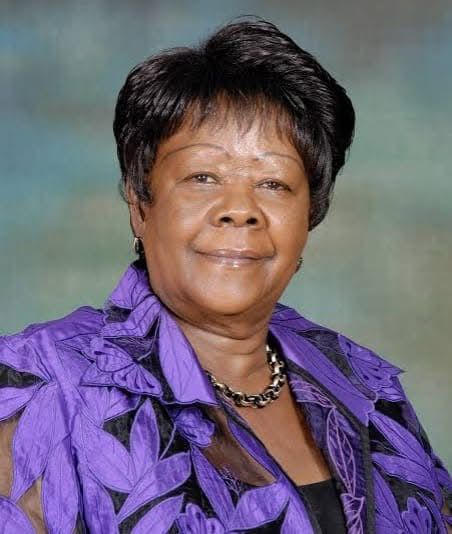
In the shifting sands of Kenya’s political evolution, few figures stand as gracefully—and as resolutely—as Nyiva Mwendwa, the woman who stepped into Parliament in 1974 when female voices in the august House were almost whispers in a thunderstorm. Her ascent to the seat of Member of Parliament for Kitui West was not just a political milestone; it was a strategic breakthrough in a landscape where women were seldom expected to lead. Yet she did, and she did so with a steady hand, a brave heart, and the poise of someone who understood both tradition and the promise of the future.
Nyiva’s journey cannot be told without the shadows and brilliance of the man who walked beside her—Kitili Maluki Mwendwa, Kenya’s first African Chief Justice. Oxford-trained, sharp-minded, and widely respected, Kitili was a rising pillar in the post-independence legal order. But power, politics, and proximity to the wrong people at the wrong moment can make even giants stumble.
The Burden of Proximity to Power
The Mwendwas moved in influential circles. They were close to Uganda’s President Milton Obote and his wife Miriam—a friendship cemented deeply enough that the Obotes became godparents to their children. When Obote was toppled and forced into exile, Miriam and the children found temporary refuge under the Mwendwas’ roof in Nairobi. This was no small gesture. In the Cold War–era politics of East Africa, alliances were never innocent.
For Kitili, the real political storm gathered when he maintained contact with Jaramogi Oginga Odinga, long after the latter resigned as Kenya’s vice-president to form the hotly contested Kenya People’s Union (KPU). Kitili had served as Jaramogi’s Permanent Secretary at the Ministry of Home Affairs and retained deep respect for him. But in a political environment where loyalty was monitored with the zeal of state security, this connection was tantamount to dancing on a razor’s edge.
Kitui County gets its first female elected MCA
After the heated 1969 Kisumu exchange between Jomo Kenyatta and Oginga Odinga, the government cracked down on KPU. Once Oginga was released from detention in 1971, he called Kitili, seeking an audience with an old friend. What Kitili didn’t know was that his phone had been bugged. The next day, Attorney General Charles Njonjo warned him sternly against meeting Odinga.
But Kitili, honorable to the end, refused to break his word.
He met Jaramogi anyway.
Within months, his name surfaced in the alleged 1971 coup plot. Rumor had it that he had been tapped to swear in Major General Ndolo if the plot succeeded—a claim that felt more like political retribution than grounded evidence. No charges were ever brought. But Kitili was cornered. He resigned.
A brilliant career dimmed, not by failure, but by politics.
The Long Shadow of a Suspicious Death
After years of quiet retreat, Kitili re-emerged in 1984 and won the Kitui West parliamentary seat—only to die the following year in a suspicious road accident. The official inquiry yielded little beyond frustration and smoke. What was promised as a rigorous pursuit of truth turned into an “all motions, no traction” affair, a corporate-style audit without deliverables.
Nyiva, now widowed and weary, refused to sit quietly. In 1986, she hired J.R. Odhiambo Obalo, a seasoned former Special Branch operative—one of the best Kenya ever produced—to dig into the truth behind Kitili’s death. Obalo had the pedigree, the networks, and the investigative acumen to break the case open.
And he almost did.
But before he could finish his work, he too died in a suspicious road accident on 29 December 1986.
To Nyiva, the message was unmistakable: she was knocking on a door that powerful hands wanted sealed forever. The cost of pushing further was too high. She stepped back—for her safety, for her children, for the fragile peace still holding.
The Woman Who Endured
Today, at 83, Nyiva Mwendwa remains very much alive—an elder, a witness, a custodian of unspoken truths. Her life is a testament to resilience: a woman who stepped boldly into Parliament when it was almost unthinkable; a wife who stood by a man targeted by political machinations; a mother who sheltered a foreign First Family in their hour of danger; and a widow who dared to chase justice even when justice seemed outlawed.
Her journey blends tragedy, courage, and leadership. It is a corporate case study in navigating high-stakes political landscapes, balancing stakeholder interests, and demonstrating strategic foresight under immense pressure. Yet beyond the jargon lies a lyrical truth: Nyiva Mwendwa walked through storms that would have broken many—and emerged with her dignity intact.
Her story reminds us that history is not only shaped by those who shout the loudest, but also by those who stand quietly, firmly, and faithfully in the right place—even when the cost is immense.
Nyiva Mwendwa’s legacy is not merely political. It’s inspirational. It’s cautionary. And it’s profoundly human.
A leader forged not just in the spotlight, but in the shadows where the real battles are fought.