
Let me speak plainly and from my own considered opinion, because I have watched Kenyan politics long enough to recognize patterns when they repeat themselves.
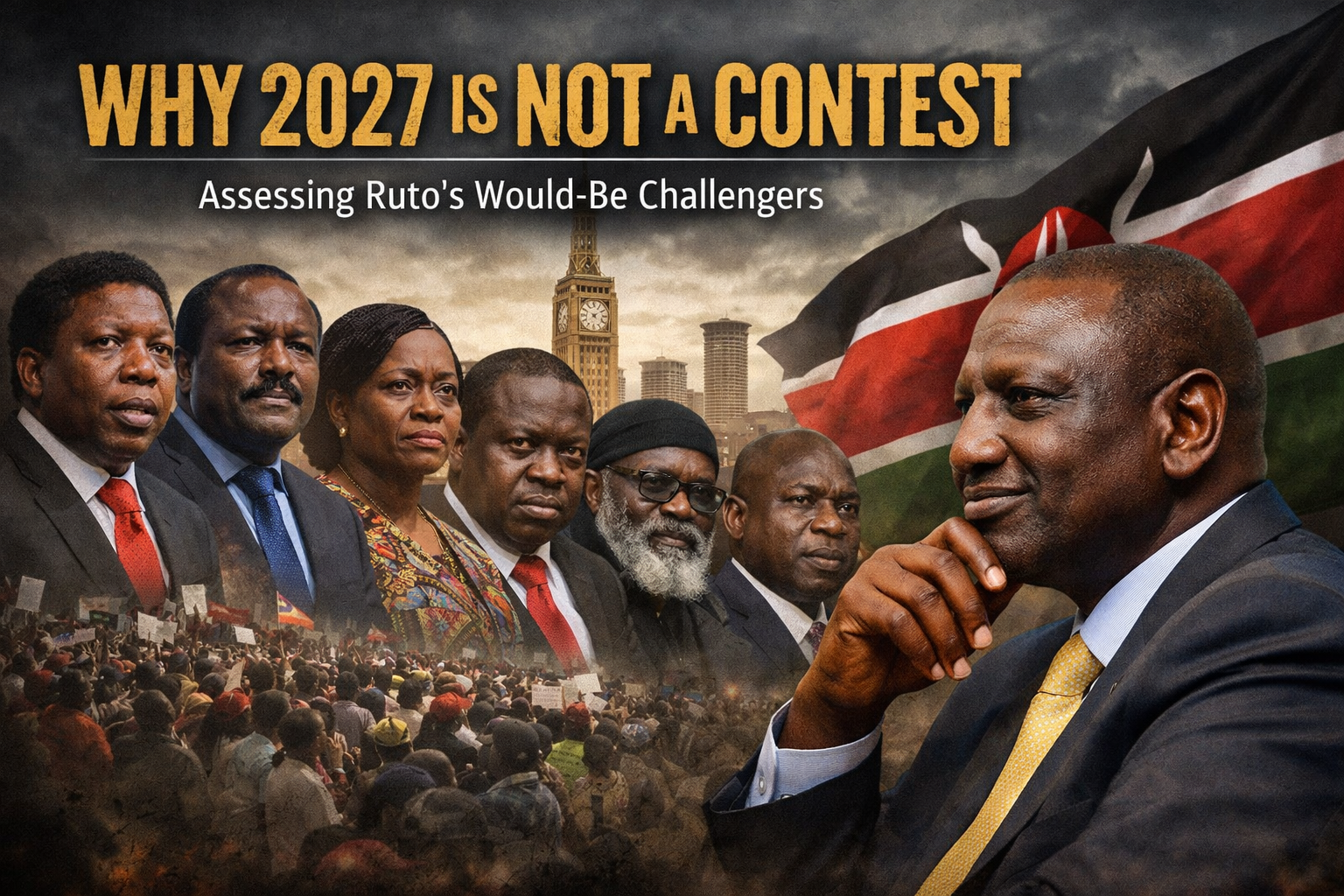
From political opportunism and ethnic antagonism to outright brutality and deception, these figures have track records marred by self-interest, division, and failures that hinder national progress. Their histories reveal a pattern of prioritizing personal gain or narrow agendas over inclusive growth, economic reform, or unity, which are key pillars for Kenya’s future.
In my view, and based on this record alone, this underscores how William Ruto faces no credible competition in 2027, as these challengers lack the vision, integrity, and broad appeal needed to lead.
Eugene Wamalwa – DAP-K
In my assessment, this one only came to the limelight as a sympathy appointee after the death of his firebrand brother and (maybe) father, Kijana Wamalwa. He has been a rabid system apologist for most of his political life and lacks the mien, gravitas, and instinct of a national political leader. Facts reveal his deceptive tactics: in 2022, he misled Professor Philip Museve Kutima into abandoning ODM with false promises of support, only to leave him hanging, showcasing a pattern of betrayal that erodes trust essential for development coalitions.
His ousting from DAP-K amid tensions with George Natembeya highlights internal party chaos and leadership failures, further evidenced by claims of expulsion and his inability to deliver transformative projects in Western Kenya. While a viral notice claimed his expulsion, DAP-K dismissed it as fake, though ongoing petitions and power struggles reveal deep rifts, including accusations of Natembeya’s attempted takeover, underscoring Wamalwa’s fragile hold on party unity vital for regional advancement.
Declaring a net worth of Sh400 million during vetting, yet avoiding elective office since 2013, raises questions about accountability and genuine commitment to public service over personal enrichment. From where I sit, such opportunism stalls regional development, as seen in his clashes during bipartisan talks where he walked out, prioritizing ego over national dialogue.
Adding to his profile, Wamalwa’s career includes family inheritance disputes and shifts between coalitions, further highlighting inconsistency that undermines long-term economic reforms in areas like Western Kenya’s agriculture and infrastructure.
Youth for Ruto 2027 movement formed
Kalonzo Musyoka
To me, he remains a long-serving system apologist. He did absolutely nothing transformative for his people, and his bravest act in politics was taking advantage of the 2007 post-election violence to undercut Raila Odinga and secure himself the vice presidency.
During his tenure, especially at the height of the ICC summons against Uhuru Kenyatta and William Ruto, he actively lobbied against their clearance, hoping to eliminate competition and position himself as the uncontested successor after Kibaki. Hard facts from the era show his opportunism amid the violence that killed over 1,000 and displaced hundreds of thousands, where he maneuvered for personal gain rather than pushing for justice or reconciliation.
As vice president, he supported Kenya’s diplomatic push for ICC deferral but was accused of opposing Raila’s dialogue efforts post-ICC, further dividing opposition forces and stalling political stability needed for economic growth. His failure to deliver infrastructure or empowerment in Ukambani paints a picture, in my view, of a leader focused more on survival than development.
While credited with peace initiatives like border buffer zones and awards for diplomacy, critics highlight unfulfilled promises in poverty alleviation, water projects, and job creation in the region, leaving Ukambani underserved despite decades in power.
President Ruto hands over keys to new homeowners at Machakos Boma Yangu Estate
Martha Karua
Well, she is an activist by posture and deeply spiteful toward Kalenjin leadership. She famously walked out on Moi during a public event, fought his regime unsuccessfully, and has carried that animosity forward.
Her hostility toward Ruto stems largely from the ODM–PNU mediation talks, where Ruto became the political brick wall she could not break. She later played a direct role in preparing incriminating clauses specifically targeting William Ruto during the PNU-linked ICC processes, not Uhuru Kenyatta. Facts underscore her divisive stance: her involvement in the ICC preparations against Ruto intensified ethnic tensions, as the cases were linked to post-2007 violence that deepened rifts rather than fostering healing.
Her failed 2022 Azimio run exposed a lack of broad support, with her activism often criticized as performative rather than reformative. In my opinion, this grudge-driven politics blocks inclusive policies essential for national development, prioritizing confrontation over coalition-building in areas such as judicial reform and economic growth.
President Ruto launches Boma Yangu Michinda social housing project
Fred Matiang’i
An administrator by training and an extremely rogue former Cabinet Secretary. He oversaw brutal crackdowns, arbitrary arrests, abductions, and the killing of perceived Ruto loyalists. Without public participation, he unilaterally decided that school buses must be yellow and police uniforms blue.
He was notoriously arrogant, directly insubordinated the Deputy President out of spite and political instruction, and has never been elected to any public office. He weaponized the intelligence system, presided over atrocities such as River Yala, and violently deported Miguna Miguna for opposing the state.
Damning facts include allegations of human rights abuses, defiance of court orders, and authoritarian overreach. His unelected status and obsession with control over consultation highlight a leadership style hostile to democracy, empowerment, and sustainable development.
Further scrutiny reveals allegations linking his tenure to scandals such as toxic sugar imports, land disputes, and claims of extrajudicial actions, which diverted focus from reforms toward suppression and instability.
President Ruto delivers affordable homes at new Mukuru Estate
George Natembeya
From where I stand, he is deeply spiteful and openly hostile toward the Kalenjin, as seen during his tenure as Rift Valley Regional Commissioner. His rhetoric during the Mau Forest evictions, the arrest and torture of Oscar Sudi and Ng’ong Ngeno for political speech, and his governance style as a governor in a historically Kalenjin region reveal a pattern of exclusion and antagonism.
Evidence from Mau evictions shows forceful removals carried out immediately despite declared notice periods, displacing thousands amid claims of brutality. Allegations that he owned land in Mau himself expose hypocrisy that fueled ethnic tensions rather than conservation.
As governor, his exclusionary leadership in Trans Nzoia has diverted energy from development to managing conflict, while corruption allegations and governance controversies have further impeded county progress in agriculture, security, and infrastructure.
Prof. George Luchiri Wajakoyah
In my reading of his record, he is an intelligence operative by background. A former member of Moi’s Special Branch, later exiled through overseas missions following the Robert Ouko murder aftermath. Once an intelligence officer, always one.
He was bankrolled by Jubilee to create political confusion, particularly among the youth who were largely supporting Ruto as the underdog. His role was to infiltrate youth groups, launch a party with a deliberately ridiculous manifesto, and distract voters with spectacle rather than substance.
His “ganjanomics” claims were economically unworkable, inflated, and legally implausible. He created noise for entertainment, cost Azimio focus, and has no genuine interest in becoming president. While funding claims are disputed, his background and tactics positioned him more as a disruptor than a builder, diverting attention from serious policy debates on youth employment and innovation.
Rigathi Gachagua
This one dismantled Kikuyu power politics single-handedly. You see, though he continues to loudly claim that he will be on the ballot in 2027, and repeatedly insists that he can only support a presidential candidate from his own community and none other, his impeachment places serious legal and political obstacles in his path.
His tribal rhetoric, Mt. Kenya exceptionalism, and divisive language fractured alliances and revived ethnic exclusion. His misconduct, abuse of office, and post-impeachment misinformation further cement perceptions of unfitness for national leadership.
Even as he continues to posture for relevance and float future ambitions, ongoing legal debates and sustained public backlash over ethnic mobilization continue to erode any claim to national cohesion, economic stability, and unity required for serious leadership.
Conclusion
Speaking honestly, in light of these profiles, it is clear William Ruto stands unchallenged in 2027. The collective baggage carried by these figures disqualifies them from credibly advancing Kenya’s agenda of unity, growth, and reform. No rival offers a compelling, clean, or coherent alternative.
And finally, just as a broader reflection beyond 2027, in 2032, the Presidency shall go to either Western or Luo Nyanza. Itazunguka huko 20 years kwanza ndio irudi coast alafu tujaribu Gusii alafu in 50 years ndio tuanze tena Central Kenya and we repeat process.
Opinion by:
David Kiprono O.G.W on Facebook