
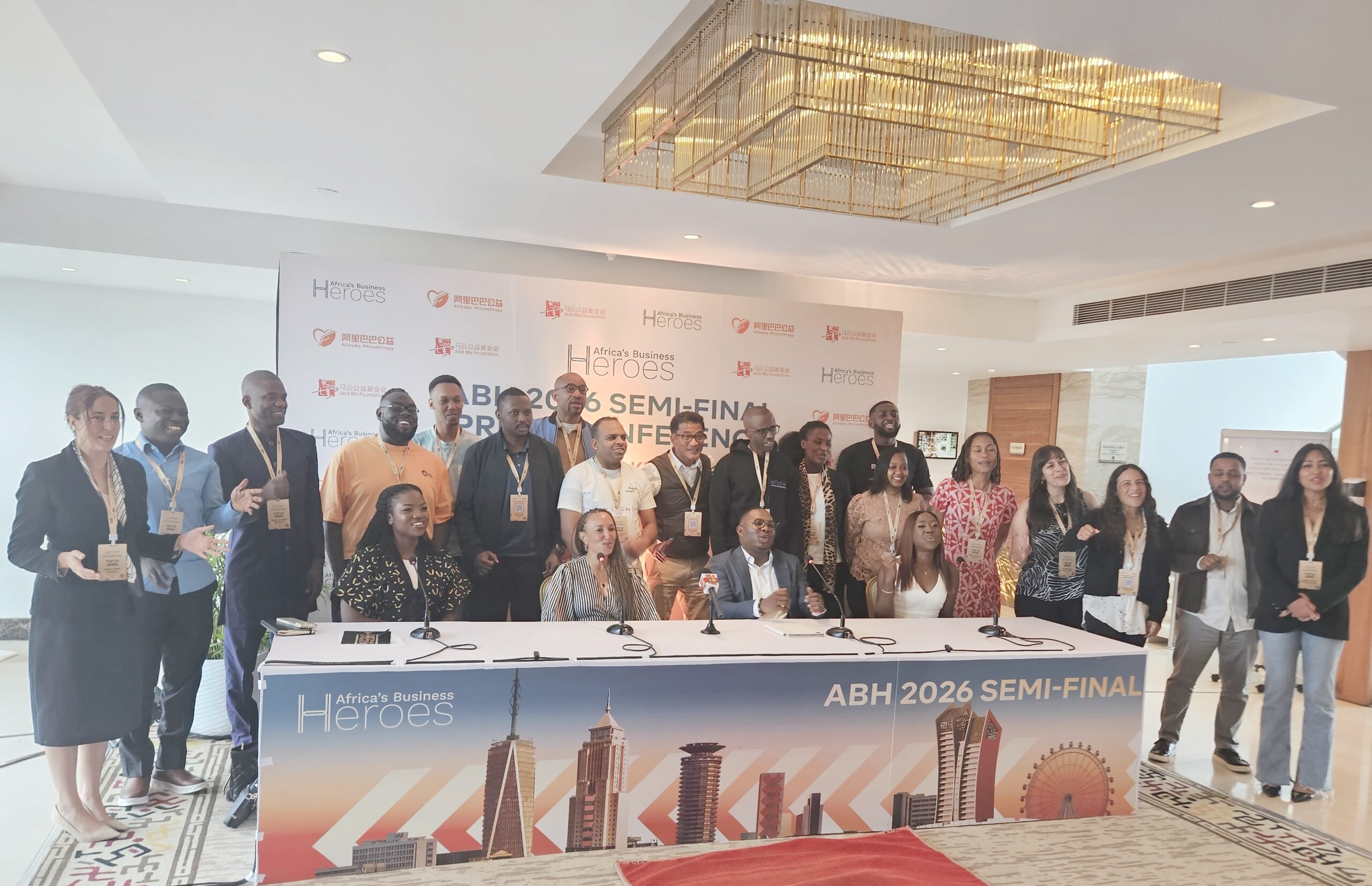
The Africa’s Business Heroes (ABH) Prize Competition has selected 20 entrepreneurs from across Africa to compete in the 2026 semi-final, which will be held in Nairobi on August 21–22.
The entrepreneurs were selected from more than 24,000 applications received from all 54 African countries, with the finalists representing 12 countries and 11 sectors.
Their businesses collectively generated about $85 million in revenue in 2025.
The Nairobi semi-final will see the entrepreneurs pitch their businesses before a panel of investors, business leaders and experienced entrepreneurs, with 10 expected to advance to the grand finale in Kigali later this year.
The competition is a philanthropic initiative of the Alibaba Foundation and provides $1.5 million in annual grant funding to African entrepreneurs, alongside mentorship, visibility and access to a wider business network.
Kome Oruade-Etim, Global Programme Manager for Acumen Angels and a judge in this year’s competition, said the changing funding environment was increasing the pressure on African businesses to build commercially sustainable models.
“It forces the question that we no longer need just businesses to solve problems, but only ones that are commercially sound, have strong fundamentals, ones that can demonstrate social impact, environmental protection and, to an extent, can coexist together.”
She said the continent also needed businesses capable of addressing persistent gaps in areas such as healthcare, energy, education and technology, warning that innovation must be designed around the realities of African communities.
“How do you bring technology to where people are at as opposed to the other way around? And I think that’s one thing that I experienced every single year. I see heroes who make technology relevant to us, by solving problems that are relevant for us.”
Abraham Mutian, CEO and co-founder of Kuza Point and a 2025 ABH runner-up, urged this year’s semi-finalists to focus on clearly communicating their businesses, financial performance and growth potential.
“Sharpen your story. Know your numbers. Articulate them clearly, and most importantly, make the judges understand your business, the value, your understanding.”
He said entrepreneurs should also use the competition to build relationships with investors, customers, mentors and other business leaders beyond the judging process.
The hidden risk facing East Africa’s small businesses
“Don’t just exchange business cards, build relationships. Not only focus on who is sitting in the judging panel. Look around this room. Your next investor, customer, partner, mentor, market or connection could already be in this community.”
Wandia Gichuru, co-founder and CEO of Vivo Fashion Group and one of the judges, said entrepreneurs should demonstrate how their businesses can grow beyond their existing markets.
“The scale of the business matters. Is this something that you’re building that can take you much wider, much further? Can it go beyond the borders that you’re in now?”
The Kenyan contingent includes Ikechukwu Anoke of Zuri Health, Naom Monari of Bena Care, Joseph Mungai of AceleAfrica and Louisa Gathecha of Bottle Logistics East Africa.
Other finalists come from Egypt, Nigeria, Morocco, Ethiopia, South Africa, Rwanda, Tanzania, Benin, Côte d’Ivoire, Madagascar and Ghana, covering sectors including agritech, healthcare, renewable energy, manufacturing, fintech, education, climate technology and technology.
The return to Nairobi is significant for ABH as the city hosted the competition’s inaugural semi-final in 2019.
Organisers said the 2026 event will also provide entrepreneurs with opportunities to connect with investors and strategic partners from Africa and beyond.
The programme will culminate in the selection of the Top 10 entrepreneurs, who will proceed to the grand finale in Kigali in December.