

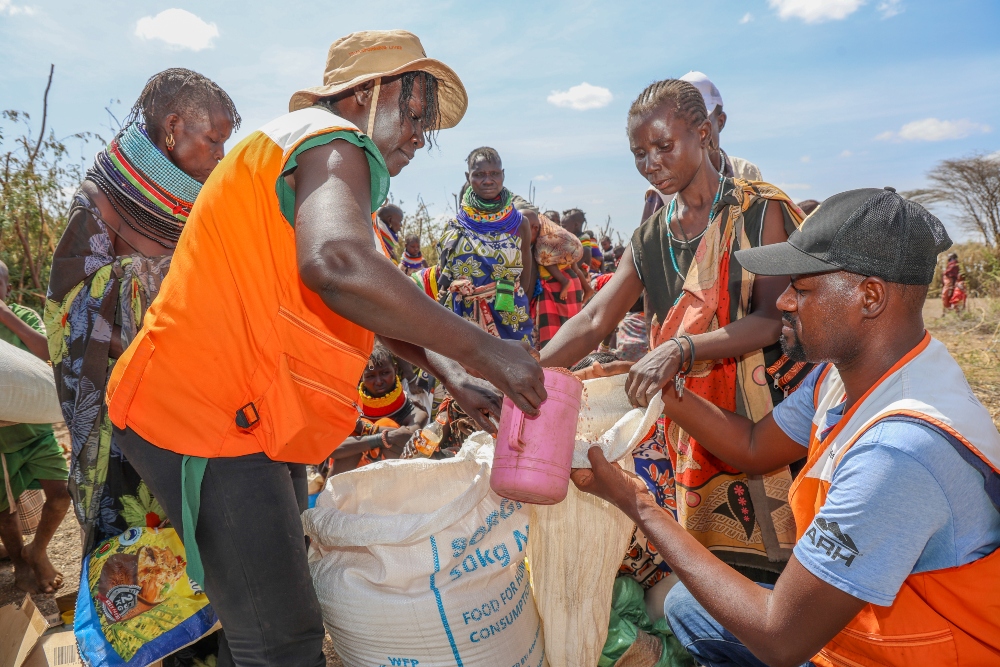
Nairobi, Kenya – 19 August 2026 – Today, World Vision Kenya joins the global community in marking World Humanitarian Day under the #ActForHumanity campaign, calling for greater protection of humanitarian workers and civilians, accountability for attacks, and respect for the laws that protect those who serve people affected by crisis.
When humanitarian workers are attacked or prevented from reaching people in need, communities in crisis pay the price through disruptions to food assistance, health services, and protection. Humanitarian workers are protected under international humanitarian law for a reason: they help people survive. As the misuse of drones and other emerging technologies creates additional risks for humanitarian workers and civilians, the need for protection and accountability is more urgent than ever.
Global Situation
Humanitarian workers are facing increasingly dangerous operating environments, with attacks, violence and restrictions threatening their ability to deliver life-saving assistance. According to the United Nations Office for the Coordination of Humanitarian Affairs (OCHA), at least 1,010 humanitarian workers were killed between 2023 and 20251, including 326 in 2025 alone across 21 countries2. OCHA has warned that attacks against aid workers are undermining humanitarian action and that those responsible must be held accountable.
Kenya’s Local Context
Kenya continues to face a complex humanitarian situation driven by severe drought, recurrent flooding, disease outbreaks and displacement, with millions of people at risk and vulnerable communities bearing the greatest impact. OCHA’s May 2026 Kenya Humanitarian Snapshot highlights the continued effects of drought and climate-related shocks, while the 2023–2024 El Niño brought significant flooding and displacement across the country3. These recurring shocks underscore the importance of strengthening preparedness, early warning, anticipatory action and timely humanitarian response so that communities can act before crises escalate.
World Vision Kenya’s Humanitarian and Disaster Management Work
World Vision Kenya works alongside communities, government and humanitarian partners to prepare for, respond to and recover from these emergencies. Key achievements in humanitarian response and disaster management include:
- World Vision Kenya reached 2.63 million people with emergency assistance between 2021 and 2025, supporting communities affected by drought, floods and displacement crises. 2. During the 2021–2023 drought, 438,679 households received cash transfers and food assistance, while in 2025,World Vision Kenya strengthened longer-term drought resilience in Turkana West, directly supporting 3,600 participants and indirectly reaching more than 31,000 people through improved water access, climate-smart agriculture and livelihoods.
- During the 2024–2025 El Niño floods, World Vision Kenya assisted 127,500 people across 12 counties, helping affected families meet urgent needs amid flooding and displacement.
1 h#ps://www.unocha.org/news/over-1000-aid-workers-killed-3-years-o<en-hands-member-states-un-relief-chief demands? 2 h#ps://www.un.org/en/node/81913?utm
3 h#ps://www.unocha.org/kenya?utm_e
- World Vision Kenya reduced its emergency response time from 14 days to seven days between 2021 and 2025 through investments in prepositioning and early warning systems, enabling assistance to reach affected communities more quickly.
- The proportion of crisis-affected households with adequate food increased from 12% to 78%, while access to emergency shelter among displaced families increased from 23% to 85%, helping families meet essential needs and regain stability during crises.
- Access to safe water among emergency-affected communities increased from 31% to 72%, while the proportion of children in emergencies receiving psychosocial support increased from 8% to 54%, strengthening support for the physical and emotional wellbeing of children and families affected by crisis.
World Vision Kenya continues to strengthen early warning, disaster risk reduction, anticipatory action and community-led resilience, helping communities identify risks early, act before hazards escalate and prepare for future shocks. This approach is also being strengthened across East Africa as World Vision responds to increasingly complex humanitarian needs.
World Vision Kenya marks international women’s day with call for action
Call to Action
As we mark World Humanitarian Day, World Vision Kenya calls on governments, authorities, humanitarian organisations, donors, communities and all relevant actors to take concrete action to protect humanitarian workers and civilians.
- Act early before warning signs become casualty lists and strengthen preparedness, early warning and anticipatory action in communities at risk.
- Stop attacks and obstruction against humanitarian workers and ensure safe, sustained and principled humanitarian access.
- Uphold international humanitarian lawand ensure that humanitarian workers and civilians are protected, including from the growing risks associated with the misuse of drones and other emerging technologies.
- Investigate every attack and hold perpetrators accountable, ensuring that violations do not go unpunished.
- Support survivors and the families of fallen humanitarian workers, recognising that every humanitarian worker killed is more than a number and leaves behind families, colleagues and communities whose lives are forever changed.
“Our work is about being there for communities when they need us most, helping them prepare for crises and recover when disaster strikes. But our teams also need to be safe to do this work. Protecting humanitarian workers and holding those responsible for attacks accountable is essential if we are to reach people who need our help,’’ says Dr. Gershon Mwakazi, Interim National Director, World Vision Kenya.
Humanitarians Are More Than a Number
Behind every humanitarian response are people who choose to show up, often working in difficult and dangerous environments to support communities through crisis. Every humanitarian worker killed is more than a number; they are a colleague, a parent, a friend and a member of a community, leaving behind families and colleagues whose lives are forever changed.
Humanitarian workers are not targets. Civilians are not targets. The laws protecting them already exist; what is needed is action and accountability when those protections are violated, including investigating attacks, holding perpetrators responsible, supporting survivors and families, and ensuring safe humanitarian access.