

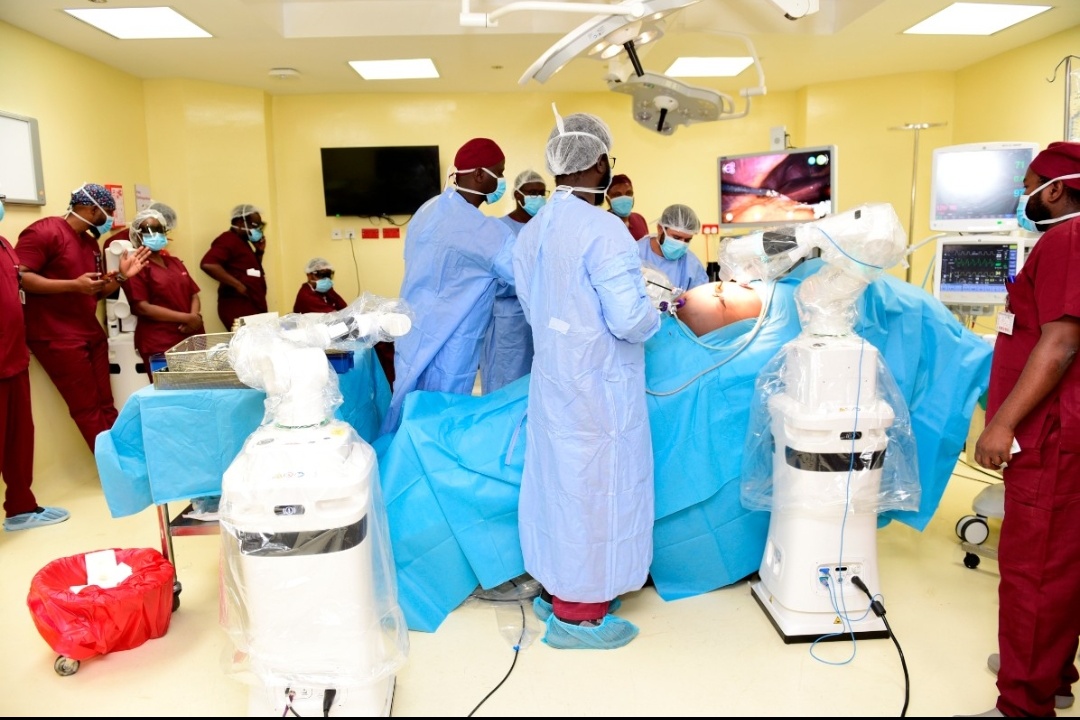
Nairobi, Kenya, August 19, 2026 – The Aga Khan University Hospital, Nairobi (AKUH,N), has successfully performed the region’s first robotic gallbladder removal surgery, marking a major milestone in the advancement of surgical care.
The procedure, known medically as a robotic-assisted laparoscopic cholecystectomy, combines the expertise of highly trained surgeons with advanced robotic technology that enhances precision, visualization and control during surgery.
The achievement expands access to next-generation minimally invasive care and reinforces AKUH,N’s position as a regional leader in medical innovation.
“Robotic-assisted surgery builds on the benefits of conventional keyhole surgery by providing surgeons with a three-dimensional view of the surgical field, greater flexibility of movement, and improved access to areas that can be difficult to visualize using traditional techniques,” said Dr Abdulkarim Abdalla, Chair of the Department of Surgery at the Hospital
The technology enables surgeons to perform delicate procedures with greater accuracy while maintaining the well-established benefits of minimally invasive surgery.
New Treatment for Men with Enlarged Prostate
Despite its name, the robot does not perform the operation independently. The surgeon remains in the operating theatre and controls every movement of the camera and surgical instruments from a specialised console.
“The robotic instruments have a greater range of movement and closely mimic the motions of the human hand, enabling greater precision and control during surgery. This allows us to perform procedures more safely,” added Dr Abdalla
The technology also allows surgeons to operate while seated comfortably at a console, reducing fatigue during lengthy procedures. Combined with enhanced vision and greater instrument flexibility, it supports better precision during complex surgical tasks such as stitching in confined spaces.
For patients, robotic-assisted procedures offer the same core benefits associated with minimally invasive surgery, including smaller incisions, less post-operative pain, shorter hospital stays and faster recovery compared to traditional open surgery.
Commenting on the milestone, CEO Rashid Khalani, said:
“Since our inception, Aga Khan University Hospital has built a tradition of introducing many healthcare firsts for Kenya and the region. This latest milestone continues that legacy. We invest in innovation because it enables safer, precise and evidence-based care for our patients.”
He added that this is the beginning of a broader journey to make robotic-assisted surgery available to more patients while advancing surgical excellence, research and training across the region.