
For decades, one of Kenya’s most persistent political narratives has been that the Luo community has been marginalised because it has never produced a President.
There is a legitimate political grievance behind that argument. Jaramogi Oginga Odinga and Raila Odinga both pursued the presidency and failed to win it.
But Kenya needs to separate two issues that are increasingly treated as though they are the same: failure to capture the presidency and exclusion from government, political power and economic development.
They are not the same.
The history of Luo political participation in Kenya tells a more complicated story.
Tribal politics: How stereotypes are costing Kenya real leadership
Luo political power since independence
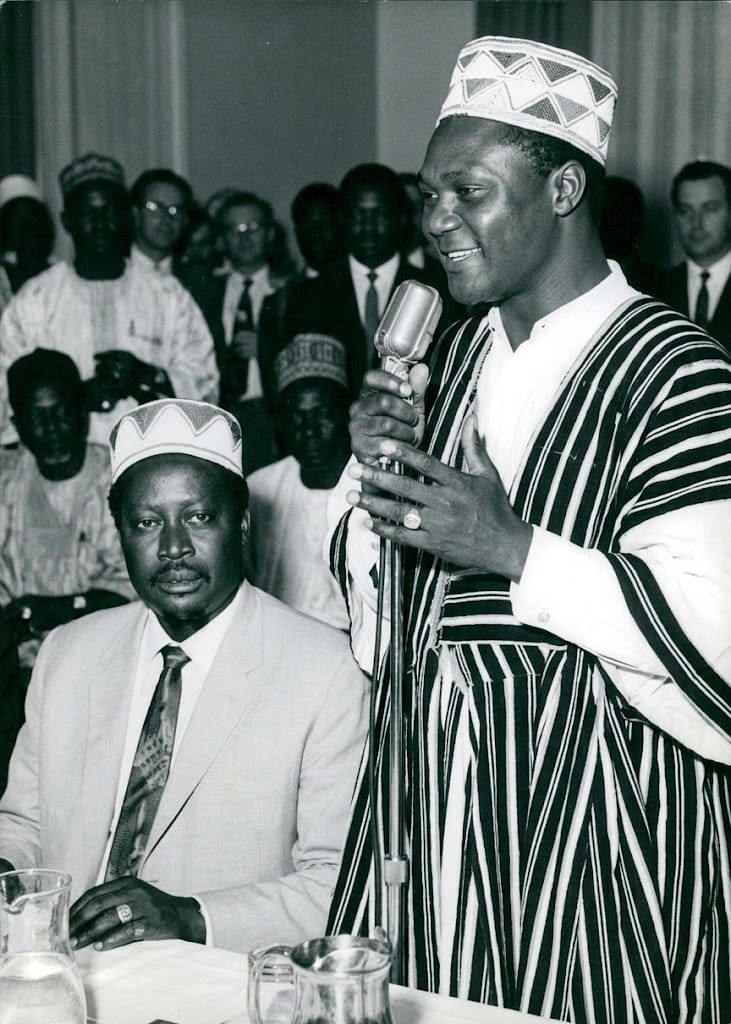
At Independence in 1963, Jaramogi Oginga Odinga became Kenya’s first Vice-President and a central figure in the new government.
Tom Mboya became one of the most influential figures in Jomo Kenyatta’s government. Ramogi Achieng Oneko, Joseph D. Otieno, James Osogo and Samuel O. Ayodo also held senior government positions.
These were not peripheral appointments. Luo leaders were operating at the centre of the newly independent Kenyan state and participating in national decision-making.
The same pattern continued, in different forms, during subsequent administrations.
Luo influence during the Moi era
During the presidency of Daniel arap Moi, Luo Nyanza became one of the strongest centres of political opposition to the government.
But opposition at the regional level did not mean the complete exclusion of Luo politicians from government.
Several Luo leaders held influential positions in the Moi administration at different times.
Dr Robert Ouko, Dalmas Otieno, William Odongo Omamo, Peter Oloo-Aringo, Wilson Ndolo Ayah, James Osogo and later, Raila Odinga, among others, were part of the national government establishment.
They were ministers and senior political figures with access to the machinery of government and the ability to influence national policy.
This distinction matters.
A community can have a strong political opposition movement while some of its leaders simultaneously hold considerable influence within government.
Raila Odinga legacy: 10 powerful lessons on life, leadership, and politics
The Kibaki government and the rise of Raila Odinga
The argument that Luo political participation has been defined entirely by exclusion becomes even harder to sustain when examining the Mwai Kibaki era.
Raila Odinga became Prime Minister of Kenya in 2008 following the post-election political settlement.
Other prominent Luo leaders, including Raphael Tuju, Anyang’ Nyong’o, James Orengo, Dalmas Otieno, Gerald Otieno Kajwang’ and Oburu Oginga, held senior government and parliamentary positions.
These were not symbolic roles.
They were positions at the heart of government, involving policy, legislation, resource allocation and national decision-making.
Raila’s position as Prime Minister was particularly significant because it placed him at the centre of the executive branch of government.
Therefore, while the Luo community did not occupy the presidency, Luo political leadership had significant access to national power.
Luo political influence under Uhuru Kenyatta
Luo political influence remained significant during the presidency of Uhuru Kenyatta.
Anyang’ Nyong’o became Governor of Kisumu County, while James Orengo became Governor of Siaya County.
Raila Odinga remained an influential political figure in Kenya and one of the country’s most important opposition leaders.
The 2018 handshake between President Uhuru Kenyatta and Raila Odinga further demonstrated the political influence Raila commanded outside the formal office of President.
Whatever one’s view of the handshake, it showed that political power in Kenya extends beyond State House.
This creates an important historical contradiction.
The Luo political base could be strongly represented in opposition while individual Luo leaders simultaneously exercised substantial influence within government and national institutions.
Era of tribal politics long gone, Ruto says
Does the absence of a Luo president explain Nyanza’s development challenges?
This brings us to the central question.
If Luo politicians have repeatedly served as Vice-President, Cabinet ministers, Prime Minister, governors, MPs and senators, can the absence of a Luo President alone explain the economic challenges facing Nyanza?
I do not think it can.
If marginalisation means that a Luo has never occupied State House, then that is an undeniable political reality.
But if marginalisation means that the Luo community has been completely excluded from government, national decision-making and access to public resources, the historical record becomes considerably more difficult to defend.
The distinction is important because political exclusion and economic underdevelopment require different solutions.
Winning the presidency may change political influence.
It does not automatically create factories, productive farms, jobs, businesses, infrastructure or competitive industries.
Nyanza has the foundations for economic transformation
The more important conversation should therefore be about Nyanza’s economic potential.
The region has substantial strategic advantages.
Nyanza has access to Lake Victoria, extensive agricultural land, Kisumu as a major commercial and transport centre, a large educated population, professionals, entrepreneurs and skilled workers.
It also has opportunities in agriculture, fisheries, aquaculture, tourism, logistics, manufacturing, trade and regional commerce.
Kisumu’s location gives Nyanza an additional strategic advantage as a gateway to western Kenya, the Lake Victoria basin and neighbouring markets.
The question is therefore not simply why Nyanza has been marginalised.
The bigger question is:
Why has Nyanza not converted its enormous human, geographic and natural-resource advantages into significantly greater economic power?
Why should regional development always be framed around who occupies State House?
Why can’t Nyanza build an economic engine so powerful that whoever occupies State House needs Nyanza, rather than Nyanza needing State House?
That is the strategic question the region should be asking.
Willis Otieno: Outspoken Lawyer Who Wrote Raila Odinga’s Swearing In Oath
The politics of marginalisation and accountability
This is where the conversation becomes uncomfortable.
Marginalisation can be real. Historical inequalities can be real. Unequal allocation of resources can be real.
But these realities should not be used as an escape for accountability.
Nyanza must also confront issues of planning, leadership, governance, investment, entrepreneurship and institutional accountability.
There is a political culture in which leaders can sometimes gain support by explaining why development has not happened rather than being required to explain what they have done to make it happen.
That creates a dangerous cycle.
A politician loses an election and tells voters that the community has been marginalised.
The electorate then believes that development will come when “their person” wins.
The politician subsequently receives another mandate without necessarily having to account for what was achieved with the political positions, public resources and influence already available.
This is where the politics of marginalisation can unintentionally become a politics of development alienation.
Is There a Political Entitlement Mentality?
It is important to be precise here.
It would be unfair and intellectually lazy to describe the Luo community as entitled.
The issue is not the character of an entire community.
The issue is a political mentality that can emerge within any community and says:
“When our person becomes President, our problems will be solved.”
That assumption is dangerous.
Presidents change.
Governments change.
Political alliances collapse.
What remains is the economic foundation a region has built.
A community does not need her son or daughter in State House to establish a factory.
It does not need a President to develop an agricultural value chain.
It does not need a President to build a modern fishing and aquaculture industry.
It does not need a President to develop tourism around Lake Victoria.
It does not need a President to create businesses, attract investment or develop skilled entrepreneurs.
And it does not need a President to hold governors, MPs, senators and county officials accountable.
David Njuguna: Little-known Kiambu Businessman Who Bought Raila Odinga a Plane
State House should be a political ambition, not a development strategy
The Luo community has every right to pursue the presidency.
There is nothing wrong with political ambition. State House is a legitimate political objective in a democratic country.
But the presidency should be a political ambition, not a development strategy.
Nyanza should not have to wait for a Luo President to prosper economically.
The region should instead develop institutions, businesses, industries, infrastructure and human capital strong enough to make Nyanza economically indispensable to every national administration.
That would fundamentally change the balance of power.
Instead of asking, “What will State House do for Nyanza?” the question would become:
“What does Nyanza have that every government needs?”
That is a much stronger negotiating position.
A new political conversation for Nyanza
The people of Nyanza deserve a different conversation with their political leaders.
Not simply:
“We have been marginalised.”
But:
“What have you done with the political power, public resources and positions you have already held?”
Those are legitimate questions.
Voters should ask them without fear, regardless of political party, ethnicity or personality.
Political leaders should be judged not only by the positions they occupy but also by what those positions produce for the people they represent.
- How many jobs were created?
- How much private investment was attracted?
- How many industries were established?
- How much agricultural productivity improved?
- How much value was added to local resources?
- How effectively were public funds utilised?
- How much did household incomes increase?
These are the metrics that should increasingly define political leadership in Nyanza.
Nyanza professionals push for skills-based governance in Kenya
From Political Representation to Economic Power
The history of Luo political participation in Kenya is too rich to reduce to a story of complete exclusion.
From Jaramogi Oginga Odinga and Tom Mboya, through Robert Ouko and Dalmas Otieno, to Raila Odinga, Anyang’ Nyong’o, James Orengo and many others, Luo leaders have repeatedly occupied influential positions within the Kenyan state.
The question, therefore, is not simply whether Luo leadership has had access to power.
The deeper question is:
- What was done with that power?
- Political representation matters.
- Presidential power matters.
Fairness in national resource allocation matters.
But economic development also requires leadership at the county, community, institutional and individual levels.
Nyanza cannot outsource its economic future entirely to State House.
The Real Liberation of Nyanza
Perhaps the next political conversation in Nyanza should not simply be:
“When will a Luo become President?”
It should be:
“When will our political leadership become so focused on development that the presidency is no longer presented as the prerequisite for our prosperity?”
Perhaps the real liberation of Nyanza will not come when a Luo finally occupies State House.
Perhaps it will come when Nyanza no longer needs State House to develop.
That does not mean abandoning the pursuit of political power.
It means understanding the difference between political power and economic power.
The ultimate objective should be to build a region with such strong businesses, industries, institutions, human capital and economic networks that no national administration can afford to ignore it.
So perhaps the question is no longer simply:
“No pawa, no development?”
Perhaps it should be:
“Why not pawa and development?”
Political power should open doors.
But leadership must build what lies behind them.
About the author
Mulumi Mwangi is:
Entrepreneur | Real Estate Professional | Business Strategist