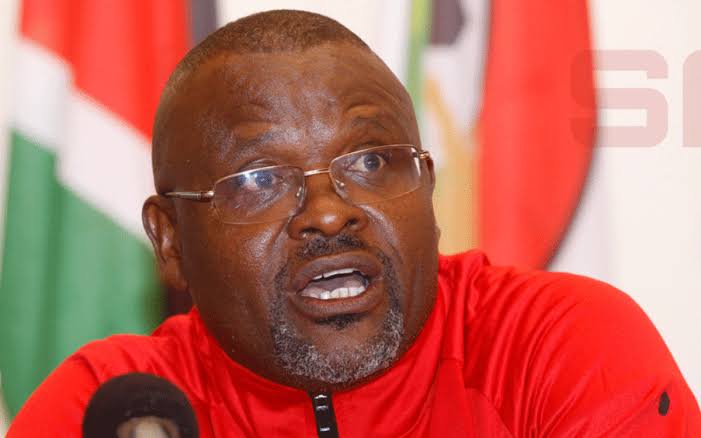

The integrity of the UNAIDS Country Director, David Chipanta, has come under threat following accusations that he is attempting to influence the selection of the Principal Recipient (PR) for the next Global Fund grant cycle — an action governance experts and Malawi’s Country Coordination Committee (CCM) members say violates principles of transparency, neutrality and good governance.
According to information we have gathered and a formal questionnaire sent to Chipanta on 24th August 2026, the UNAIDS Country Director has allegedly been calling partner organizations implementing HIV, AIDS and TB interventions to tell them who to endorse as the next Community PR.
The allegations come just days after the CCM held its decisional meeting on 18th August 2026 at the Ministry of Finance, where members with quorum confirmed deliberated and voted on all agenda items, including Item 8: the endorsement of the CSO PR Selection Committee Report.
Random interviews conducted with partner organizations reveal a pattern: Chipanta has been making phone calls after the CCM meeting, telling partners who to endorse as the next PR.
The controversy is heightened by the fact that Chipanta himself participated in the 18th August meeting and, according to CCM records and his own admission, voted in favor of World Vision International (WVI) as the Community PR.
However, our investigations established that the majority of CCM members who attended the meeting endorsed ActionAid Malawi (AAM).
Governance observers say any attempt to lobby members after a duly constituted vote risks overturning the outcome and erodes trust in the CCM.
When presented with a questionnaire seeking clarity, the UNAIDS Country Director refused to provide a direct response on his role and on whether his engagement with CCM members after the vote was not in conflict with his position at the UNAIDS.
He also declined to comment when asked how such an engagement safeguard the independence of individual CCM members and avoid the perception that the influence of the UNAIDS Country Representative is being used to alter or overturn the outcome reached by members during a duly constituted CCM meeting.
“Please talk to CCM Secretariat,” was all he say.
CCM is the custodian of Malawi’s Global Fund grants for HIV, TB and Malaria — resources worth millions of dollars that must be managed with the highest standards of accountability.
Global Fund policy is explicit: CCMs must operate on principles of transparency, inclusivity, and good governance. Decisions are expected to be made independently by members during quorate meetings, not through back-channel calls after the fact.
Five culture club episodes spotlighting the sounds shaping African Music
The actions allegedly taken by Chipanta, therefore, raise three fundamental concerns:
*1. Conflict of Interest and Abuse of Office*
A UN Country Director who votes in a CCM meeting and then allegedly lobbies members afterward cannot be seen as neutral. It creates a clear conflict between his role as a technical partner and his conduct as an alleged political broker.
*2. Undermining CCM Independence and Finality*
By allegedly contacting stakeholders post-meeting, the UNAIDS Country Director is accused of attempting to alter or overturn a decision already made by a duly constituted CCM. This sets a dangerous precedent that votes in the CCM can be “revisited” through influence outside the meeting room.
*3. No Mandate to Interfere*
UNAIDS globally plays a technical support role in HIV responses. There is no provision in Global Fund rules that empowers UNAIDS to direct or influence the endorsement of a Principal Recipient. If Mr. Chipanta was acting in his official capacity, he must explain under what authority.
The PR selection under Item 8 has already sparked controversy. Six CCM members recently wrote to the CCM Chairperson objecting to any post-meeting solicitation of input, arguing it compromises the finality and integrity of the 18th August decision.
To now have allegations that a UN agency head is leading such solicitation only deepens the crisis of confidence in the process.
Malawi’s HIV, TB and Malaria response depends on donor confidence. The Global Fund, government, and communities must have faith that CCM decisions are free from undue influence.
The role of UNAIDS should be to support, not to subvert. The role of a Country Director should be to uphold, not to undermine, the governance systems that protect public health resources.
Malawians deserve a PR selection process that is clean, fair, and final. Anything less betrays the very communities the Global Fund exists to serve.