

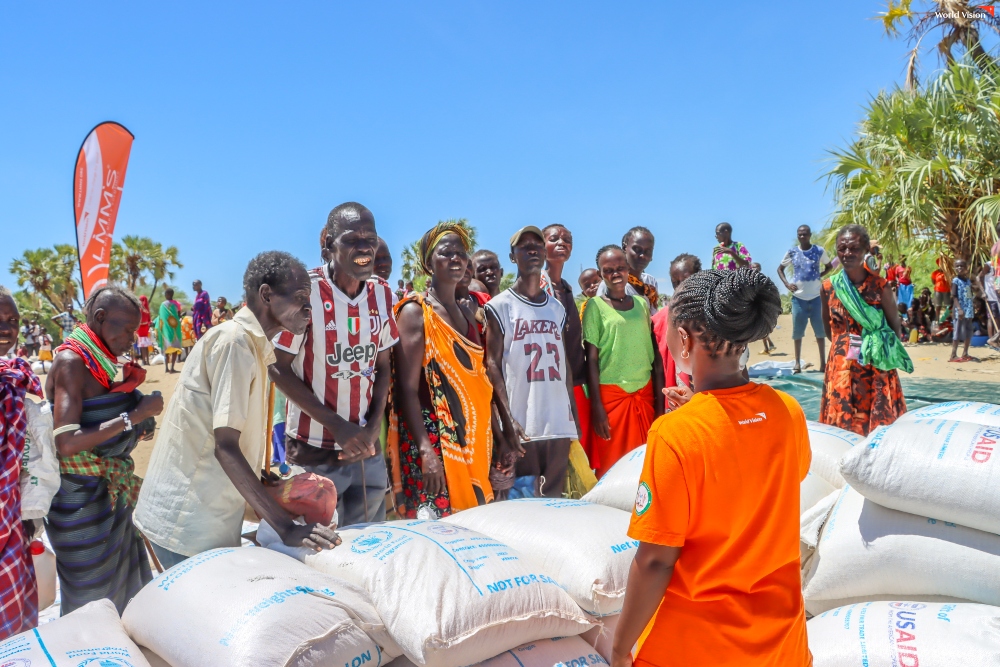
On World Humanitarian Day, World Vision Kenya (WVK) joins the global humanitarian community to celebrate the dedication of aid workers and the resilience of communities impacted by crises. This year’s theme, “Strengthening Global Solidarity and Empowering Local Communities,” emphasizes the vital role of local leadership in humanitarian response.
The Global and Kenyan Humanitarian Crises
Globally, over 120 million people are forcibly displaced due to conflicts, natural disasters, and violence, with 36 million refugees seeking asylum in host countries1. The World Food Programme reports that 828 million people face hunger, and 250 million more are at risk, worsened by climate change and conflict2. In Kenya, the humanitarian situation is equally pressing, with 843,165 refugees and asylum seekers, mainly from South Sudan, Somalia, and the Democratic Republic of the Congo, residing in settlements such as Kakuma and Kalobeyei3. Climate-related disasters, including prolonged droughts, have left over 4.5 million people food insecure, while 1.5 million children are at risk of malnutrition4. Additionally, limited access to healthcare and education continues to affect vulnerable communities across the country5.
World Vision Kenya urges action to end FGM on international day of Zero Tolerance
World Vision Kenya’s Humanitarian Response
Amid these challenges, WVK remains committed to improving the lives of the most vulnerable children and families, particularly those affected by conflict, displacement, and climate-related shocks. Through its humanitarian programs, WVK provides immediate relief and long-term solutions that focus on resilience, empowerment, and sustainable development. In the year 2024, we reached over 4.2 million people, including 2.24 million children, across 37 counties with life-saving assistance and development programs in health, education, nutrition, water, sanitation, livelihoods, and disaster relief. These interventions are designed not only to address urgent needs but also to foster sustainable growth, resilience, and the ability of communities to overcome future challenges.
Key Humanitarian Efforts in 2024:
- 2.24 million children and 1.96 million adults were supported through integrated health, nutrition, and education programs benefiting the physical and mental well-being of the vulnerable populations.
- 119,853 children were enrolled in the child sponsorship program, receiving services like education, healthcare, and protection from exploitation, ensuring their safety and development.
- 44,000 refugees and host community members in Kakuma and Kalobeyei were supported with livelihood training, climate-smart agriculture, and psychosocial services, empowering them by building their resilience and adapting to environmental challenges to improve their economic stability.
- 160,000 refugees in Kakuma & Kalobeyei received emergency food assistance in partnership with the World Food Programme (WFP).
- 250,000 people received emergency assistance, including food, shelter, and healthcare, during natural disasters, providing vital nourishment during critical times.
- 11,305 individuals participated in peacebuilding, livelihood, and resilience programs, strengthening community cohesion, enabling them to develop the skills to improve their livelihoods and foster positive relationships.
- Over 3,000 boreholes and water points were rehabilitated or constructed, providing clean water to affected communities, improving hygiene, and preventing waterborne diseases. This contributed to healthier communities by ensuring consistent access to safe drinking water.
- Over 1,500 households gained access to clean water and sanitation facilities, providing households with access to clean water and proper sanitation, which improved their living conditions and hygiene.
Empowering Communities in Crisis
World Vision Kenya’s humanitarian response focuses on empowering communities to take charge of their recovery. Whether it’s providing access to education for displaced children or promoting sustainable agriculture to help families cope with climate shocks, we are committed to building long-term resilience.
https://biznakenya.com/world-vision-kenya/
A Call to Action
World Vision Kenya calls on governments, humanitarian partners, and the international community to:
- Increase investment in community-led responses, ensuring that local solutions are prioritized in addressing humanitarian crises.
- Support long-term resilience-building programs that enable affected populations to recover and thrive despite ongoing challenges.
- Strengthen partnerships to ensure that vulnerable communities are empowered and have access to the services and resources they need.
“Global solidarity is essential in times of crisis, but local communities must be at the forefront of the response. Their knowledge, resilience, and leadership are critical in shaping sustainable solutions. On this World Humanitarian Day, we honour the frontline workers who risk their lives every day to bring hope and relief to those who need it most,” said Gilbert Kamanga, National Director at World Vision Kenya.