
As World Vision Kenya joins the nation in commemorating World Food Day 2025 with national celebrations in Homa Bay County, we stand with the global community to remind everyone that food is a basic human right. This year’s theme, “Hand in Hand for Better Foods and a Better Future”, is a call for all of us, from governments to communities and individuals, to work together to tackle hunger and malnutrition, both around the world and right here in Kenya.
Hunger is Still a Huge Problem Worldwide
The sad truth is, hunger isn’t going away. In 2024, about 673 million people globally didn’t get enough to eat, and more than 2 billion people faced serious food insecurity. Africa is especially hard hit, with over 20% of the population here struggling with hunger. This shows that we need urgent, coordinated action if we want to reach zero hunger by 2030.
The Crisis in Kenya
Around 15.5 million people in Kenya are severely food insecure, many going days without enough food. For our children, the picture is even more worrying, about 800,000 children under five need treatment for malnutrition. Kenya ranks 90th out of 125 countries on the Global Hunger Index, meaning the problem is serious. Beyond the human cost, malnutrition is expensive for the country, costing almost KSh 374 billion a year, which is about 7% of our GDP5.
World Vision Kenya Efforts to End Hunger
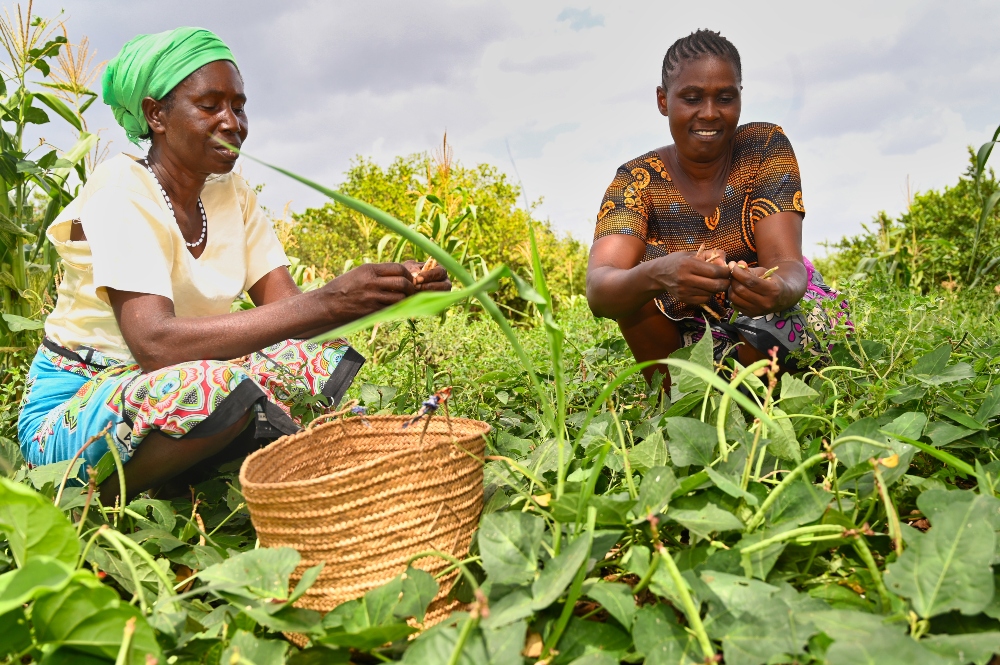
At World Vision Kenya, we believe every child deserves to grow up healthy and strong. That can’t happen without good food. So, we work closely with families, communities, and government partners to build lasting solutions. Together with the Ministry of Agriculture, Livestock, and Fisheries, we’re supporting farmers to grow more nutritious, high-value crops like orange-fleshed sweet potatoes, groundnuts, and honey, as well as dairy and poultry farming. These help families earn income and put better food on the table.
Our community programs, like Building Secure Livelihoods, Empowered World View, Saving for Transformation, and Regreening Communities, have helped more than 79,500 households in the past year to increase their food production and improve their nutrition.
World refugee day 2025: World Vision Kenya calls for bold action in solidarity with refugees
In the last 12 months alone, WVK has:
- Trained over 25,000 smallholder farmers in climate-smart agriculture and nutrition-sensitive farming techniques.
- Distributed more than 150,000 seedlings of nutritious crops to vulnerable households.
1 FAO, The State of Food Security and Nutri3on in the World 2024: h(ps://www.fao.org/publica8ons/sofi-2024/en/
2 Business Daily Africa, Severely Food Insecure Kenyans More Than Doubled to 15.5 h(ps://www.businessdailyafrica.com/bd/economy/severely-food-insecure-kenyans-more-than-doubled-to-15-5m 5154116
3 UNICEF Kenya, The State of the World’s Children 2023: Nutrition Report:
h(ps://www.unicef.org/kenya/reports/state-worlds-children-2023 4 Global Hunger Index 2024, Concern Worldwide &Welthungerhilfe:h(ps://www.globalhungerindex.org/kenya.html 5 World Bank Kenya, The Economic Cost of Malnutri3on in Kenya, 2022: h(ps://www.worldbank.org/en/country/kenya/overview#3
- Supported over 50,000 children with nutrition screening and referral services to health facilities.
- Provided school feeding programs benefiting over 40,000 schoolchildren across multiple counties, ensuring they receive at least one nutritious meal daily.
- Enabled saving groups of over 18,000 caregivers to improve household food security through better resource management.
ENOUGH Campaign: A world where every child enjoys ENOUGH nourishing food so they can thrive. We also know that school meals are one of the best ways to fight child hunger and help kids stay in school. That’s why, through our ENOUGH Campaign, we’re pushing for more investment in school feeding programs that use locally grown food. When children eat well, they learn better and have a brighter future.
A Call for All of Us to Act
World Vision Kenya is calling on everyone, from the government to communities, businesses, and individuals, to:
- Invest more in climate-smart farming and nutrition programs.
- Expand and support school meal programs everywhere.
- Help smallholder farmers access markets and resources.
- Make sure policies and budgets match the urgent need to end hunger.
“As Kenyans, we have the power and responsibility to end hunger. But we can’t do it alone. We must work hand in hand with the government, communities, donors, and families to make sure every Kenyan has enough good food. The choices we make today will shape the future our children inherit,” says Gilbert Kamanga, National Director, World Vision Kenya.