
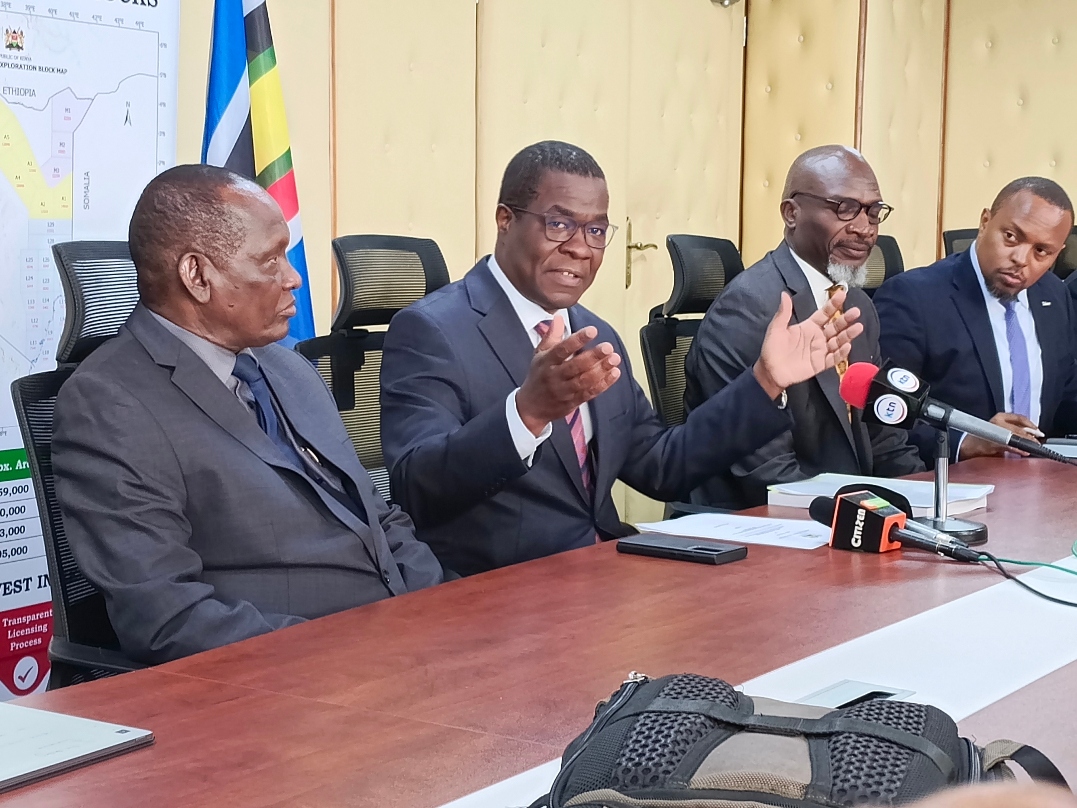
The Government of Kenya has officially approved the South Lokichar Basin Field Development Plan (FDP). This marks a significant step in the country’s effort to achieve large-scale industrial growth and commercial oil production. The approval will be sent to Parliament for ratification under Article 71 of the Constitution and the Petroleum Act. This plan represents the most progress ever made on an FDP in Kenya.
The plan was submitted by Gulf Energy E&P BV (GE), a Kenyan company licensed to develop Blocks T6 and T7 in the Tertiary Rift Basin. It details the complete development of six oil discoveries and outlines ongoing appraisal and exploration activities. The project will take a phased approach, starting with the largest and most developed reservoirs.
The FDP anticipates a total investment of about USD 6.1 billion to develop the fields over a 25-year contract. Estimated recoverable resources are about 326 million stock-tank barrels. Phase 1 is projected to produce 20,000 barrels of oil per day, increasing to 50,000 barrels per day in Phase 2. GE expects First Oil by December 2026 and aims for full production by 2032.
On a national level, the project should diversify Kenya’s economic base, improve the balance of payments, and attract global investment by positioning the country as a stable and competitive oil producer. It will also help develop local skills in petroleum engineering, logistics, and operations. These skills are essential for long-term economic growth.
Pwani oil, Nurses team up to promote hygiene awareness in Naivasha
The Government stressed the need for inclusive development. It has called for collaboration among ministries, county governments, community representatives, and the contractor. Local content, including jobs, procurement, and capacity-building for host communities, will be prioritized during implementation.
For Turkana and West Pokot, the South Lokichar development promises better infrastructure, new business opportunities, and revenue-sharing benefits. Nationally, it shows Kenya’s readiness for high-value industrial investments and brings the country closer to realizing its broader petroleum potential.