
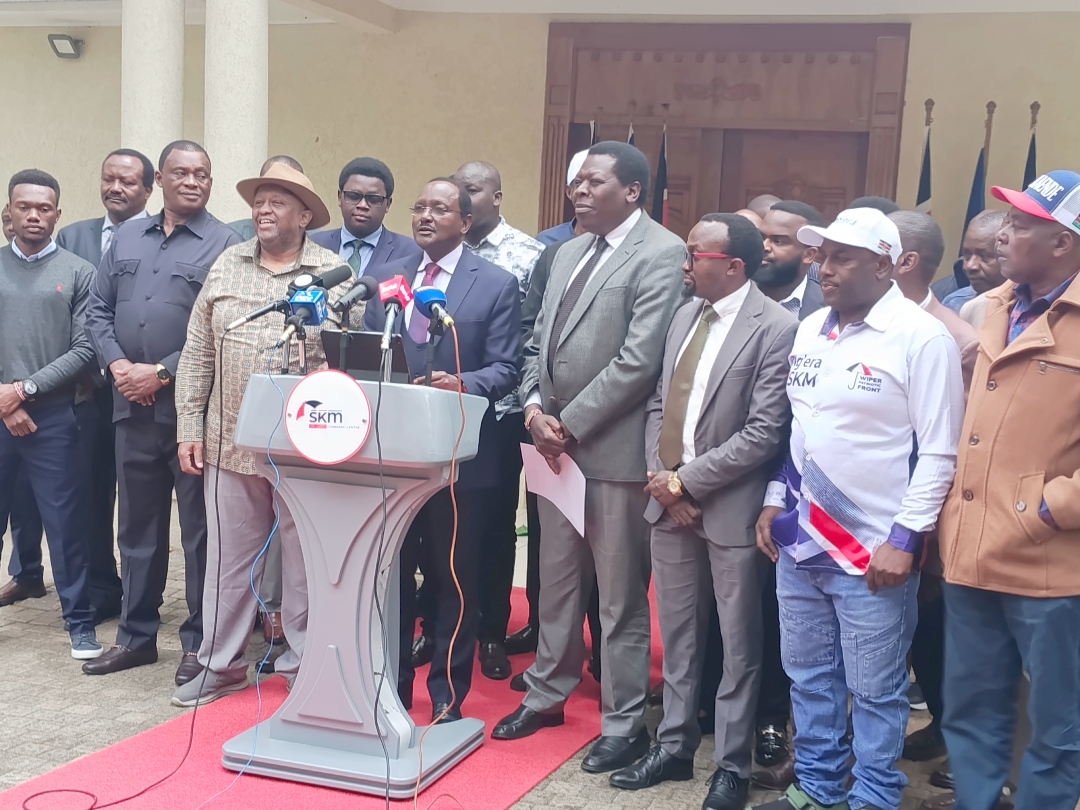
The alternative government stated that Kenya’s government plan to sell part of its stake in Safaricom has once again come into legal and financial doubt since the High Court annulled the transaction and directed the 15 per cent shareholding to be put back to the Government on behalf of the public.
The bench of three judges made up of Justices Francis Gikonyo, Roselyne Aburili and Tabitha Ouya held that the divestiture had been carried out in breach of the Constitution and various laws, the opposition pointing to inadequate public participation, the concealment of relevant information and flaws in the approval process.
The deal, which was finished on June 30, 2026, saw the Government sell 6.01 billion of its Safaricom shares to Vodacom for Sh204.3 billion, that is Sh34 per share. As part of the agreement there was also a payment based on the future dividend rights relating to the Government’s remaining shares, which brought the total value of the transaction up to over Sh244 billion as reported.
What the ruling establishes is that the government is now obliged to retrieve the shares while the parties address the financial repercussions of reversing a transaction which had already taken place.
The court held that the divestiture had been a matter of public policy and that both the Executive and Parliament had therefore needed to have meaningful opportunities for public participation. It also censured the authorities for what it called obscurities, misrepresentations and the concealment of relevant information about the transaction.
Safaricom commits KES 1m sponsorship to 2025 SOYA Awards
The judges also considered that the arrangement had effectively transferred the majority control of Safaricom to Vodacom and as a result gave rise to issues under both the capital markets and competition laws; thus the court set aside the approvals and decisions relating to the transaction, including Sessional Paper No. 3 of 2025.
The judgment also cast doubt on certain aspects of the way transaction advisers were obtained and identified breaches relating to the constitutional principles which concern public procurement, accountability and the management of public resources.
For Safaricom, the ruling has no impact on its day-to-day activities or on its ability to offer telecommunications and M-Pesa services. The main issue at present is ownership and control, since Vodacom’s share had increased to about 55 per cent as a result of the broader transaction.
Although the Government has dismissed the High Court’s ruling and is now taking steps to challenge it, Treasury Cabinet Secretary John Mbadi stated that an appeal had been filed and that the divestiture had complied with the law, including the relevant Cabinet and parliamentary procedures.
The appeal suggests that the High Court’s ruling may not be the last word on the dispute. Safaricom has stated that it is examining the judgment and its consequences, pointing out that the issue is still open to further legal proceedings.
The case is now turning its attention away from the initial sale and towards the possibility of reversing a transaction which involves billions of shares and hundreds of billions of shillings while the appeal is ongoing. At the same time, it is once again highlighting the procedures that governments must adhere to when getting rid of major public assets, thus giving the opposition the advantage.