
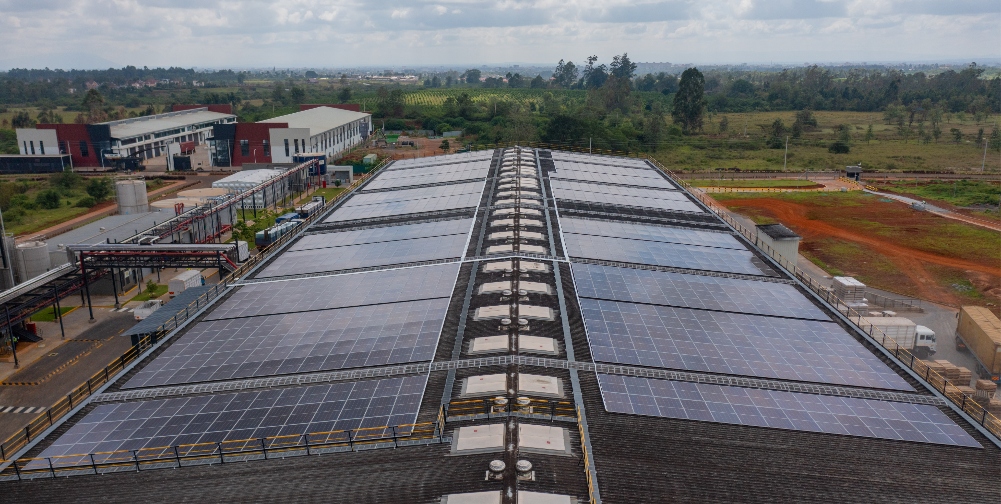
Kenya’s private sector is quickly adopting clean energy. Kenya Wine Agencies Limited (KWAL) is the latest major manufacturer to add solar power to its operations. The company has set up a 700 kV rooftop solar plant at its Tatu City manufacturing hub. This move highlights the growing willingness among industries to rely less on grid electricity and use renewable options.
The installation took eight months to complete under a Power Purchase Agreement (PPA) with OFGEN Africa. This reflects a larger trend in Kenya’s industrial sector. Businesses are increasingly generating their own renewable power to protect against rising energy costs and meet global sustainability goals. KWAL expects the system to provide at least 15 percent of the factory’s annual electricity needs, reducing operational costs by 7.5 percent.
Huawei takes Ecosystem approach to ramp up renewable energy uptake
Beyond saving money, the project is a significant step toward Kenya’s national aim of achieving a fully renewable energy mix by 2030. Manufacturing companies, known for high energy consumption, play an important role in this transition. By setting up a hybrid solar-grid system, KWAL shows how industries can maintain reliability while cutting their carbon footprint.
The Tatu City facility’s current EDGE certification also positions the company as a leader in green manufacturing. EDGE, an international standard from the IFC, honors buildings that show measurable reductions in energy and water use. KWAL plans to expand its solar capacity to 1,500 kV, which could help it qualify for the highest EDGE Zero Carbon certification, setting a standard for other Kenyan manufacturers.
The project has received approval from bodies like EPRA, and its partnership with IFC shows strong support for adopting renewable energy. As more companies make similar moves, Kenya’s path toward sustainable industrialization looks increasingly possible.