

For many years private hospitals, local clinics, and drugstores in Kenya have had the same difficult and important problem: how to consistently have genuine and high-quality medical supplies without having to pay the high prices that distributors charge or without running the risk of obtaining counterfeit products.
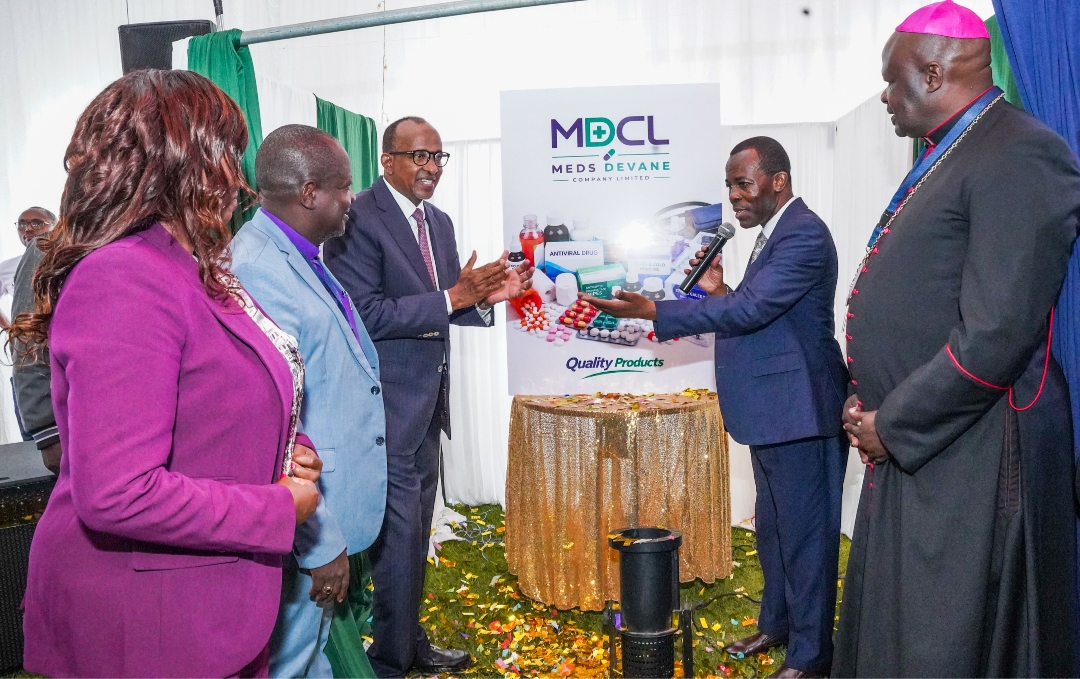
On Tuesday, 29 September 2026, a major change took place in the market structure. The Mission for Essential Drugs and Supplies (MEDS)—the faith-based giant of the supply chain which has for four decades provided drugs and supplies to Kenya’s non-profit health sector—launched MEDS Devane Company Limited (MDCL), a new commercial company that has been set up specifically to cater to the private healthcare market.
MDCL will begin operating on 1 November 2026, marking MEDS’ first move into commercial distribution by making use of its WHO-prequalified quality testing facilities to challenge the existing wholesale systems throughout East Africa.
The private health sector in Kenya has seen rapid expansion in order to respond to the increasing demand within the framework of Universal Health Coverage (UHC) programmes. Yet, private clinics and independent pharmacies often operate in a fragmented wholesale market in which quality control and dependable delivery are unreliable.
The MDCL system is designed to eliminate these problems by giving private operators direct access to products that are traceable and of assured quality in a number of areas: pharmaceuticals, diagnostics, laboratory supplies, infection prevention solutions, orthopaedic implants, and medical equipment.
At the launching ceremony in Nairobi, Rt. Rev. Benard Owuor, who chairs the MDCL Board of Directors, stressed that the development of the market called for a separate entity:
Since the healthcare situation in Kenya is still developing, the private healthcare sector, pharmacies, and other healthcare institutions need a partner who is responsive from a commercial point of view and who understands the urgency, complexity, and responsibility involved in the provision of healthcare. That is why MDCL has been set up.
MDCL is not like traditional commercial distributors, whose main concern is margin, because it has the support of MEDS’ quality-assurance facilities.
MEDS runs a Quality Control Laboratory which is prequalified by the WHO—being one of the very few such laboratories in the area—and in 2025 alone examined about 2,350 product samples, offering its testing services to organisations in 46 countries. The company makes use of its ISO 9001:2015 certification and ISO/IEC 17025 accreditation and works in conjunction with the Pharmacy and Poisons Board to carry out post-market surveillance and to identify falsified medicines.
MDCL functions as a separate corporate body which is governed by professionals, enabling it to act at the speed needed by commercial buyers while still maintaining competitive prices.
1xBet Supports Flood-Affected Families in Kenya With Direct Essential Aid
Although MDCL’s main concern at the moment is providing services to private health providers in all 47 of Kenya’s counties, its long-term strategy extends beyond the national border.
Dr. Wycliffe Nandama, who is the CEO of MEDS and also acts as General Manager of MDCL, stated that private providers require more than just off-the-shelf inventory. “They need quality assurance, reliable availability, prompt delivery, professional support, and a partner who realises that each product supplied can have a direct effect on patient care,” Nandama said.
The strategic roadmap aims to first achieve a high level of presence in Kenya before going on to expand MDCL’s commercial distribution channels into wider East African markets, where demand for certified, counterfeit-free pharmaceuticals still exceeds the available supply.
The spin-off is named after Rev. Sr. Joan Devane, an American medical missionary and pharmacist who founded MEDS in 1986 in a small warehouse in Ruaraka and initially stocked 30 health items.
The parent organization is now in charge of more than 2,000 health technologies, provides services for over 10,000 health facilities, and has become a self-sustaining social enterprise which operates entirely on its own since it ceased relying on donors in 2005.
Together with MDCL, MEDS established the MEDS-Strathmore Supply Chain Academy in collaboration with Strathmore University as a scheme designed for training the next generation of healthcare logistics managers to help support Kenya’s changing health ecosystem.