

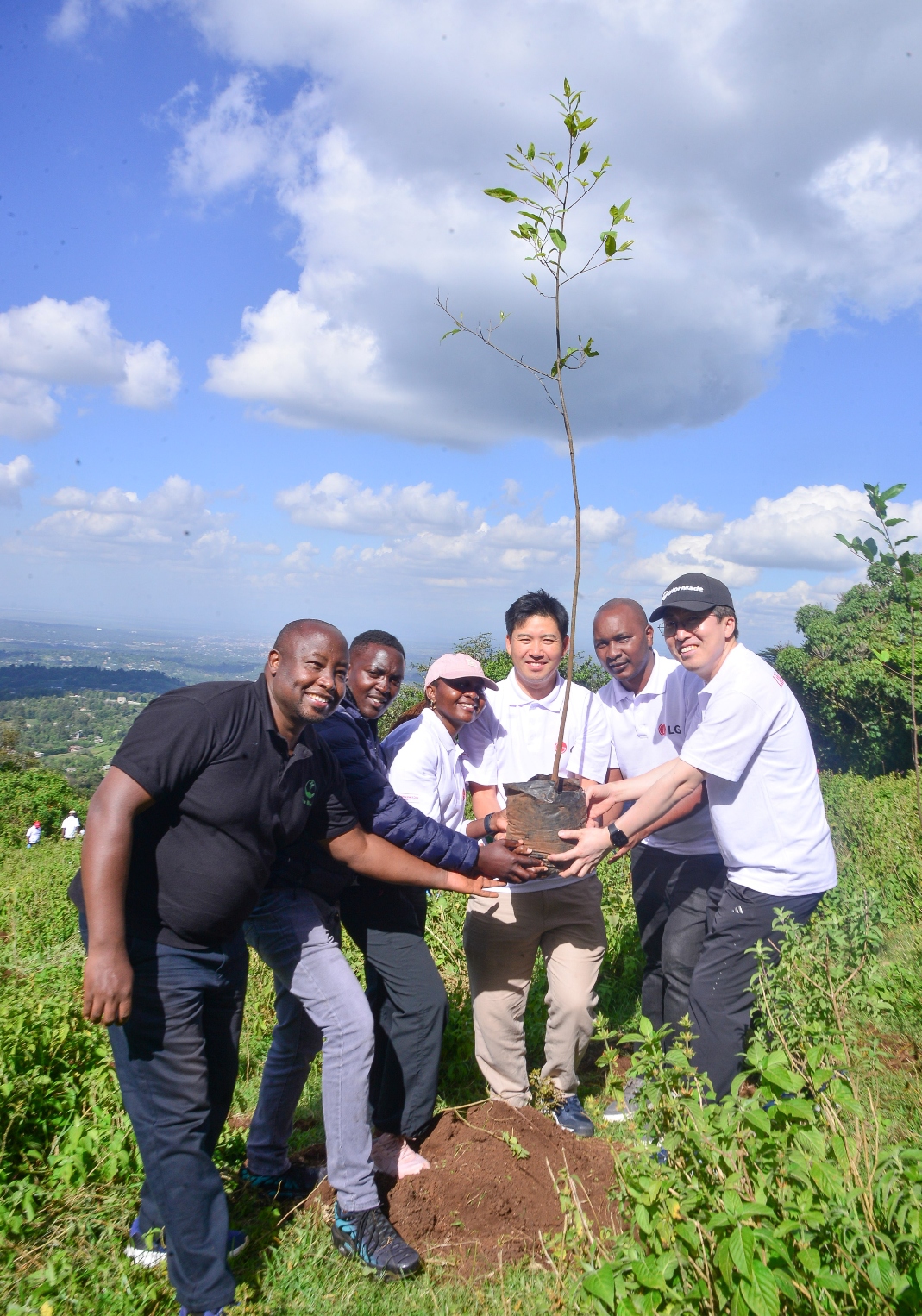
LG Electronics (LG) East Africa, in partnership with the Ngong Hills Metro Community Forest Association (CFA) and Tree Niches has today planted more than 300 indigenous trees at the Ngong Hills Forest, reinforcing ongoing efforts to restore one of the country’s most important water catchment ecosystems.
The exercise comes at a time when Kenya is grappling with the effects of environmental degradation, including declining forest cover, biodiversity loss, prolonged droughts, flooding and increasing pressure on critical water catchment areas. While the country has made significant progress in increasing tree cover over recent years, many indigenous forests continue to face threats from illegal logging, encroachment, charcoal production, overgrazing and unsustainable land use practices.
Ngong Hills Forest, a 7,000-acre ecosystem located approximately 25 kilometres southwest of Nairobi, is among the country’s critical natural assets. In addition to its role as a popular recreation destination, the forest serves as an important water catchment area supporting communities across Nairobi, Kajiado, Kiambu and neighbouring counties. It is also home to diverse plant and animal species whose survival depends on the continued protection of the ecosystem.
LG dual cool inverter AC: Smart cooling built for Kenya
The latest tree planting exercise builds on a restoration programme launched by LG and its partners in 2025. During last year’s initiative, more than 300 indigenous seedlings were planted across degraded sections of the forest. Follow-up monitoring revealed that 252 of those trees survived, representing an impressive 84 percent survival rate and highlighting the effectiveness of the ongoing stewardship and maintenance efforts undertaken by community members and conservation partners.
In addition to the tree planting exercise, LG Electronics donated four benches that will be installed at strategic locations throughout the forest. The benches are intended to enhance the experience of visitors and hikers while fostering greater appreciation of the importance of conserving Kenya’s natural landscapes.
Speaking during the exercise, LG Electronics East Africa President Donghun Lee said environmental conservation requires sustained commitment rather than one-off interventions.
“Last year, together with our partners, we planted more than 300 indigenous trees in this forest. We are pleased that 252 of those seedlings survived, achieving an 84 percent survival rate. That success demonstrates that meaningful restoration is possible when tree planting is followed by proper care and monitoring. It has also motivated us to return and plant another 300 trees as part of our long-term commitment to environmental sustainability,” said Lee.
According to conservation experts, restoring degraded forests has become increasingly important as Kenya experiences more frequent climate-related shocks. Healthy forests help regulate these shocks by moderating water flows, reducing soil erosion, sequestering carbon, containing local temperatures, in addition to providing habitats for wildlife.
Dr. Solomon Kipkoech, the Co-founder and Director of Tree Niches noted that restoration efforts must focus on rebuilding healthy ecosystems.
“Kenya has lost significant portions of its natural ecosystems over the years due to deforestation and land degradation. Every successful restoration project helps reverse that trend. The impact of such initiatives go beyond the trees planted to demonstrate the value of sustained partnerships and community-led conservation.”