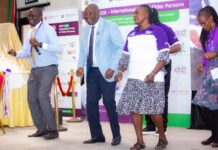

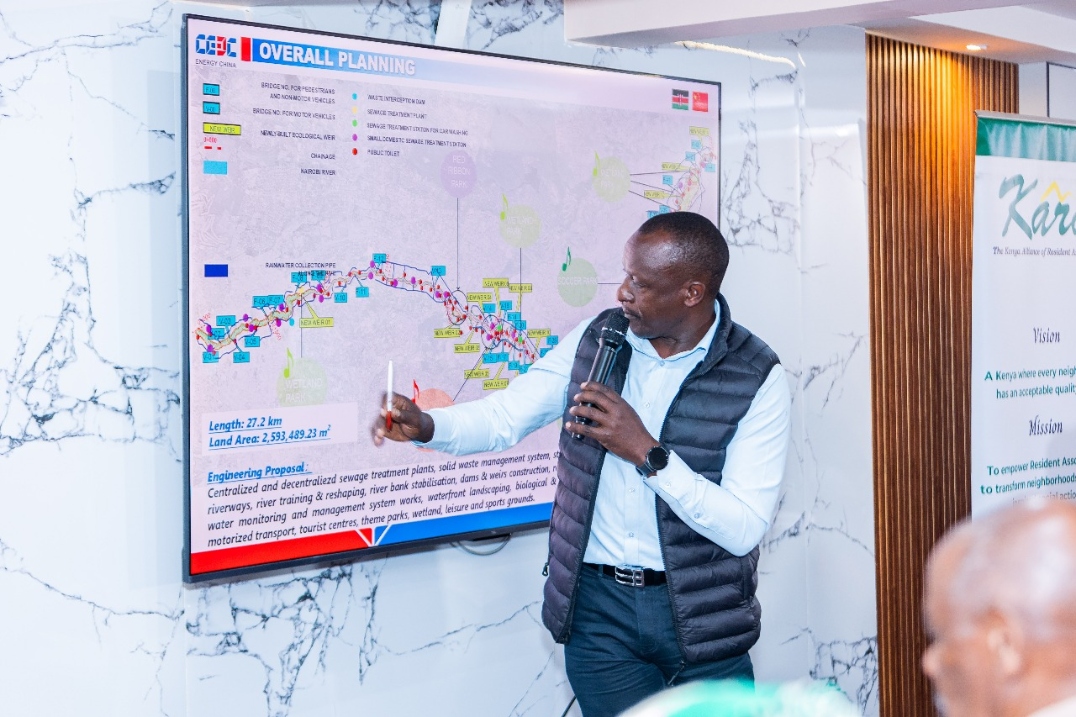
Nairobi’s KSh 50 billion Nairobi River Regeneration Program is moving into a new phase, with residents and stakeholders now actively involved in its implementation. On 20th August, the Nairobi Rivers Regeneration Project (NRRP) Technical Team, working with the Kenya Alliance of Resident Associations (KARA), held a community engagement forum at Waridi Paradise Hotel.
The session gathered residents from Zones 2 and 3, covering Raphta Road, Kilimani, and Kileleshwa. Key updates focused on reclaiming riparian land, developing a proposed sewer line, and creating a new Non-Motorised Transport (NMT) corridor along the Nairobi River, Kirichwa Kubwa, and Kirichwa Ndogo. These steps aim to reduce pollution, restore public spaces, and encourage sustainable mobility in the city.
For decades, the Nairobi River has acted as an open sewer, carrying untreated waste, industrial runoff, and garbage into the Athi River before it reaches the Indian Ocean. Only 20% of urban residents have access to proper sewer systems; most rely on septic tanks and open drains, many of which discharge illegally into rivers. This has led to widespread contamination, repeated disease outbreaks, and damaged ecosystems across counties.
Bolt partners with NTSA, NPS, and Nairobi County
Launched in March 2025 by President William Ruto, the regeneration program aims to restore 27.2 kilometers of the river and its tributaries. With its designation as a Special Planning Area (SPA), the program will produce an Integrated Development Plan (IDP) by 2027. This plan will balance environmental recovery with infrastructure upgrades and social equity, including relocating households from unsafe riverbanks and building affordable housing and modern markets.
The upcoming forum highlights the importance of public participation in urban change. By offering a space for dialogue, accountability, and community-driven solutions, the NRRP ensures that Nairobians play an active role in reclaiming their river.
If successful, the initiative could turn the Nairobi River from a polluted sewer into a clean, green urban lifeline, restoring health, dignity, and opportunities for millions of residents.