

Kenya is gaining traction in its efforts to manufacture vaccines locally. This push is important not only for public health but also for strengthening the economy, creating jobs, and positioning the country as a regional manufacturing center.
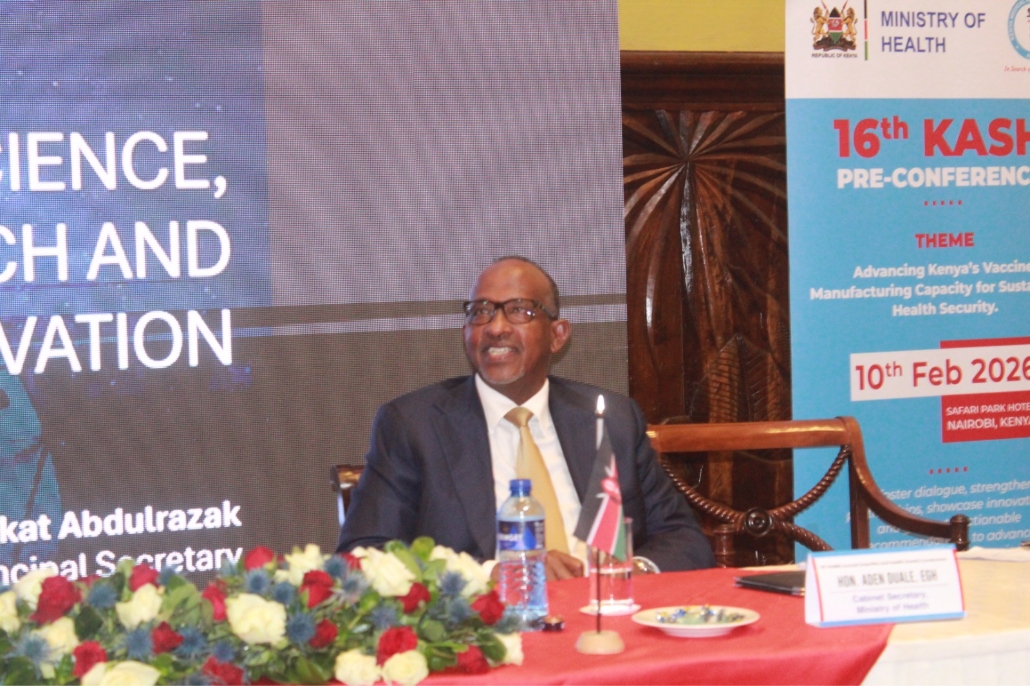
During the 16th KEMRI Annual Scientific and Health Conference in Nairobi, health and science leaders warned that Kenya’s heavy reliance on imported vaccines makes its healthcare system and economy vulnerable during global crises. Almost all vaccines used in the country come from abroad. This dependence leads to supply disruptions, high costs, and delays in emergencies.
Dr. Wesley Rono, Chief Executive Officer of the Kenya BioVax Institute, stated that local vaccine production would lessen exposure to global supply issues while building domestic industrial capability. He highlighted that producing vaccines would encourage investment across the pharmaceutical value chain, including research, development, logistics, and distribution.
“Vaccine manufacturing is not just about preventing disease; it is also about economic security and self-reliance,” Dr. Rono said. He added that Kenya has the chance to build capacity over time, starting with basic processes and gradually advancing to more complex production.
KEMRI Director General Prof. Elijah Songok echoed these economic benefits, pointing out that Kenya has a strong scientific foundation that can support manufacturing. This would create opportunities for skilled jobs and innovation. He stressed that enhancing local capacity would enable research institutions to turn scientific knowledge into practical products with commercial value.
Dr. Tom Kariuki, CEO of the Science for Africa Foundation, emphasized that Kenya needs to move beyond innovation in labs to focus on industrial applications. He believes that local manufacturing would help retain skilled workers, attract partnerships, and generate long-term benefits from investments in science and technology.
Develop more vaccines to combat ‘silent pandemic’ of antimicrobial resistance: WHO
Health Cabinet Secretary Aden Duale mentioned that the COVID-19 pandemic revealed weaknesses in Africa’s health supply chains. He highlighted the urgent need for domestic production of critical health products. The proposed Kenya Biomass Institute would support vaccine manufacturing efforts and improve preparedness for future pandemics.
“Health security and economic stability are closely linked. Investing in vaccine manufacturing saves lives and boosts the economy,” Duale said. He also noted that government policy would aim to translate research, technology, and innovation into real results.

This initiative fits within the Bottom-Up Economic Transformation Agenda, which prioritizes local manufacturing, skills development, and value addition. Conference leaders agreed that partnerships with development agencies, private investors, and regional institutions will be vital for ensuring sustainability and market success.
If local vaccine manufacturing is implemented, it could position Kenya as a supplier for the East African region, lower long-term healthcare costs, and improve the country’s status in Africa’s expanding health manufacturing sector.