
Athi Water Works Development Agency (AWWDA) has launched its 2024-2029 Strategic Plan, which aims to transform access to clean water and sanitation in Nairobi, Kiambu, Murang’a, and nearby areas.
This five-year plan centers around projects such as the Thiririka Dam Water Supply Project, Maragua 4 Dam, Northern Collector Tunnel II, and the Nairobi Satellite Towns Water and Sanitation Improvement Project (NATWASIP). These initiatives will create new water sources with a total daily storage capacity of 461,000 cubic meters. Additionally, they will increase water treatment capacity to 318,500 cubic meters per day, build over 443 kilometers of transmission pipelines, and lay down 880 kilometers of sewer networks.
The agency aims to tackle the growing gap between water supply and demand, ensuring that millions of Kenyans in urban and peri-urban areas have reliable access to safe water and sanitation. This plan will help minimize waterborne diseases, improve public health, boost household productivity, and create new opportunities for businesses and industries that depend on a steady water supply.
The five-year plan will require KES 206 billion in investment, which will come from government budgets, development partners, public-private partnerships, and innovative financing sources, including climate funds.
In his keynote speech, Eng. Eric Murithi Mugaa, Cabinet Secretary for Water, Sanitation and Irrigation, praised the Strategic Plan as a bold move towards achieving Kenya’s development goals. He stated, “These projects bring us closer to universal water and sanitation coverage by 2030, as outlined in Vision 2030 and the Bottom-Up Economic Transformation Agenda. The benefits—healthier families, thriving businesses, and stronger economies—cannot be overstated.”
Government Efforts To Get Rid Of Kibera Flying Toilets
Eng. Joseph Kamau, CEO of AWWDA, stressed the importance of access to clean water in driving socioeconomic change. He said, “Water is not just about consumption; it supports health, education, agriculture, and business. By securing long-term supply, we improve lives and build a foundation for job creation and food security.”
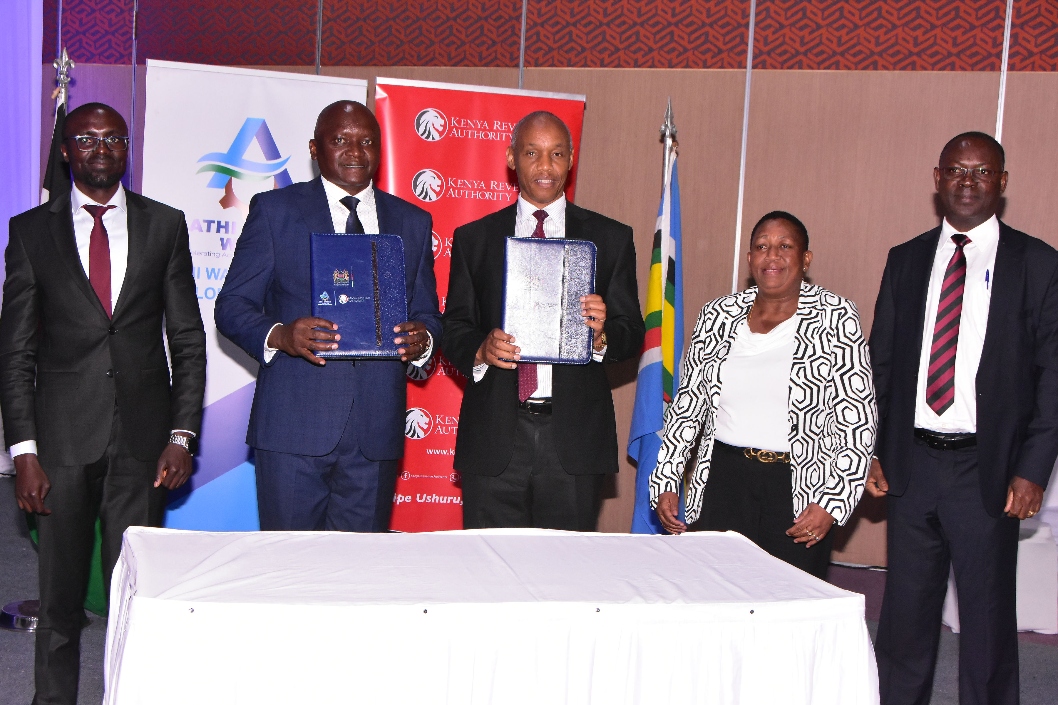
The launch also marked the start of bulk water operations from the Karimenu II Dam and Northern Collector Tunnel systems, which can now supply over 217 million liters of treated water daily to Nairobi and surrounding areas. To reinforce accountability, AWWDA has signed a Service Level Agreement with the Kenya Revenue Authority (KRA) to manage bulk water revenue collection.
Ms. Mary Munga, Board Chairperson of AWWDA, highlighted good governance as essential for the agency’s mission. She noted, “With rapid urbanization and limited resources, we need strong partnerships and oversight. AWWDA is not just delivering infrastructure; it is enhancing dignity, prosperity, and national unity through water.”