
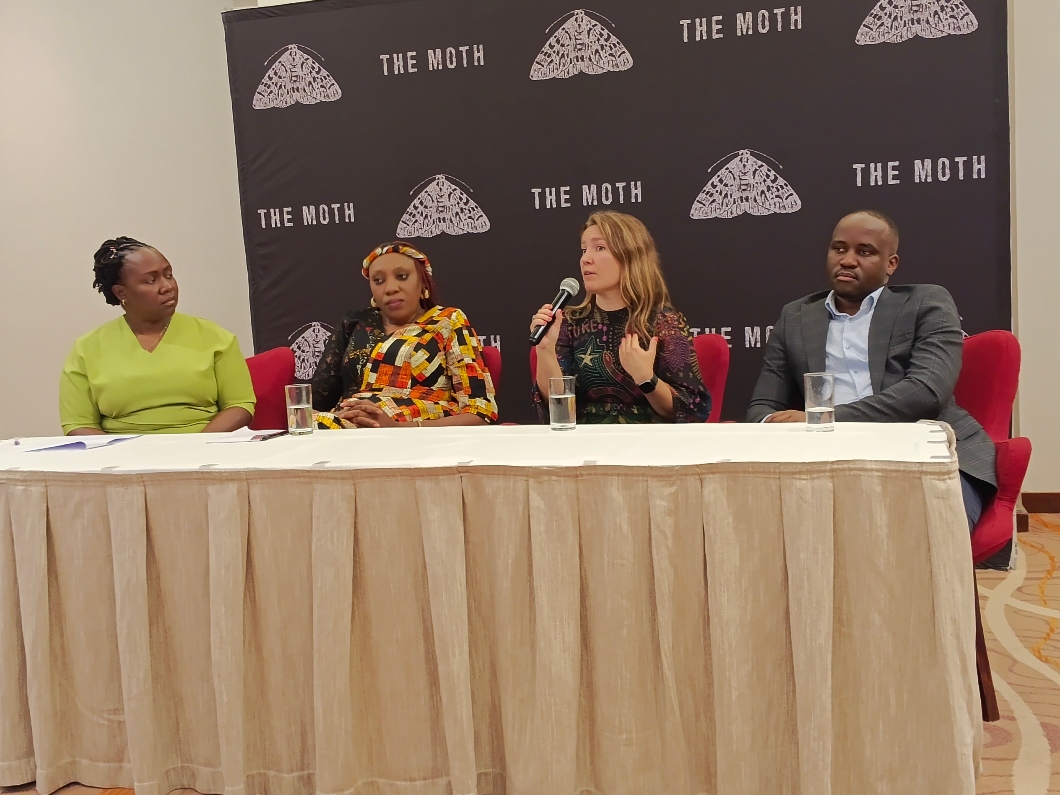
At a quiet corner of Nairobi’s Tamarind Hotel, the room fell silent as voices rose, not in protest, but in truth. Storytellers, journalists, and advocates from Kenya, Uganda and Nigeria shared one by one stories of resilience, and hope. The theme, “From Pain to Power,” was perfectly fitting.
This was not just another policy forum or media workshop. It was a gathering of hearts, with storytellers determined to use their experience to create change. Organized by The Moth, a global storytelling movement, the roundtable examined how personal stories can reshape empathy, influence policies, and challenge existing narratives about Africa.
For many in the room, storytelling was not just art; it was survival.
“When someone shares their story live, you connect, feel their fears, their triumphs, and their courage,” said Ugandan storyteller Brian Turyabagye. “That connection is healing. It reminds people that they’re not alone.”
Across the continent, stories have long carried Africa’s memory, passed around fires, in marketplaces, and through song and proverb. But in an age of hashtags and algorithms, the storytellers gathered in Nairobi asked a simple, radical question: What happens when Africans tell their own stories and believe them?
Sarah Austin Jenness, Executive Producer at The Moth, reminded participants that the personal is political. “The more personal a story is, the more universal it becomes,” she said. “Stories challenge existing narratives and build empathy. They help people realize that issues like gender equity or food security are not distant problems—they exist in our own backyards.”
She spoke of Roselyn Orwa, a Kenyan widow whose bravery in sharing her story at the United Nations in 2022 helped influence reforms protecting widows’ inheritance rights. “That story changed perceptions and laws,” Jenness said.
Telling stories that matter: Maurice Muendo on the making of BOBO
For Kenyan journalist Caroline Gamal, storytelling requires ethics as much as empathy. “We must tell stories that heal, not harm,” she said. “When we cover trauma, we bear a responsibility to restore dignity—not to exploit pain.”
The room buzzed with reflection as panelists discussed the gap between digital storytelling and live storytelling. On social media, emotions can be fleeting; live stories, on the other hand, demand presence. “A live story lets people laugh with you, cry with you, and move with you,” said Turyabagye. “It’s not about clicks; it’s about connection.”
Still, the storytellers agreed: the digital space is not the enemy. It is the new fire that must be cared for wisely. “Social media can connect us across borders and nations,” said Gamal, “but only if we use it to humanize, not sensationalize.”
As the sun set behind Nairobi’s skyline, the session concluded with a collective vow—to nurture the next generation of African storytellers. Through The Moth’s programs, more than 800 storytellers in 30 countries have already been trained to turn memory into movement.
Their message was simple but powerful: storytelling is not just about words; it’s about witness.
From pain to power, from silence to spotlight, Africa’s storytellers are not waiting for permission to be heard. They are reclaiming their voice and rewriting the continent’s story, one truth at a time.