
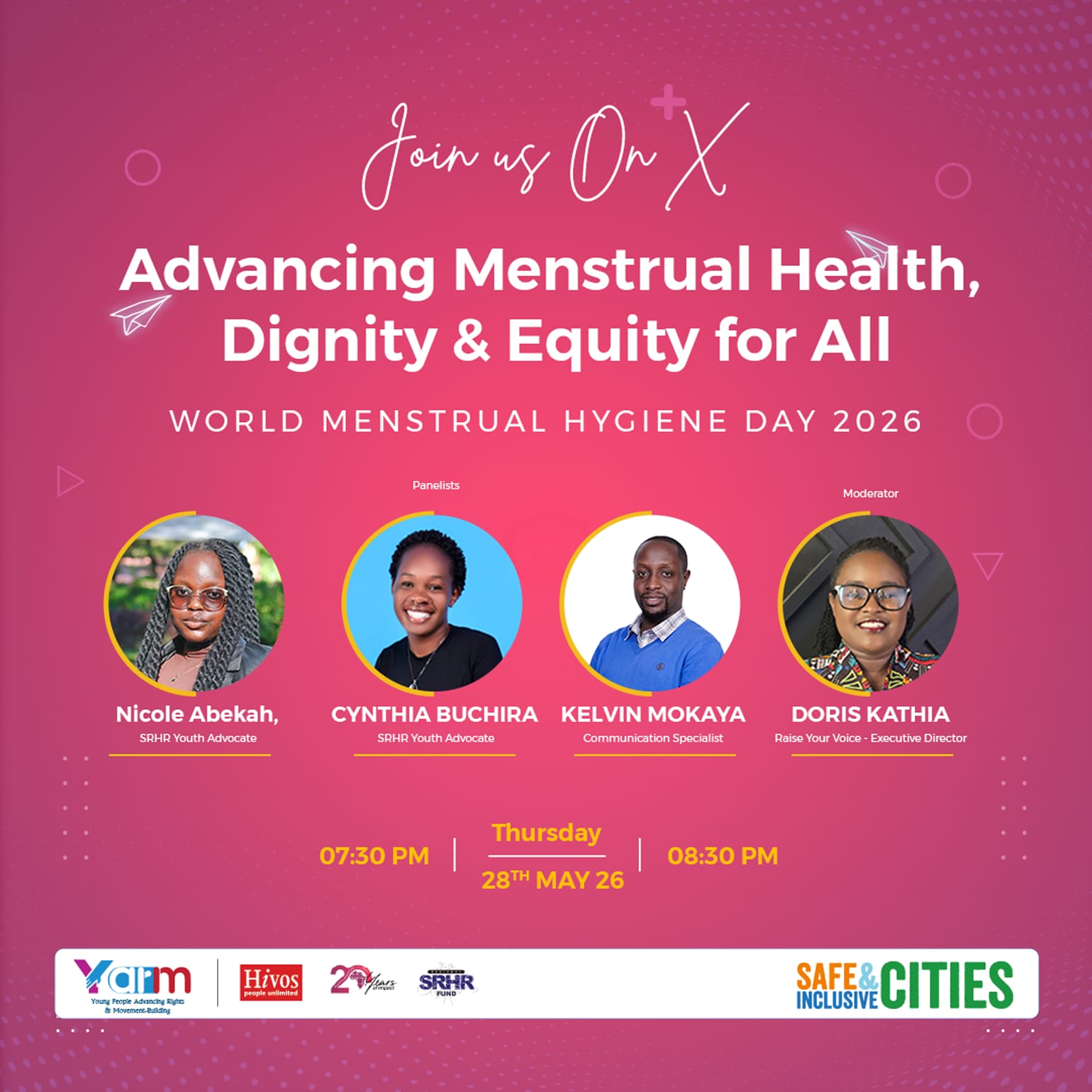
Menstrual health is a fundamental part of the health, dignity, education, and well-being of girls and young women in Kenya. Yet, despite menstruation being a natural biological process, many girls and women continue to face barriers that prevent them from managing their periods safely, comfortably, and with dignity. High costs, limited accessibility, inadequate sanitation facilities, lack of information, and social stigma continue to affect the lives of many young girls and women, particularly those from low-income and underserved communities.
Advancing menstrual health means ensuring that every girl and young woman has access to safe, affordable, and quality menstrual products whenever and wherever they need them. No girl should have to miss school, stay at home, avoid social activities, or use unsafe alternatives simply because she cannot afford sanitary products. Menstrual products are essential health and hygiene necessities, and access to them should be treated as a basic need rather than a privilege.
The high cost of sanitary pads remains one of the major barriers to menstrual equity. Families already facing the rising cost of food, transportation, education, healthcare, and other essential goods may struggle to meet the recurring cost of menstrual products. The government should therefore introduce policies that reduce the cost of production and make menstrual products more affordable for consumers.
One important measure would be to remove or reduce VAT on raw materials used by companies that manufacture sanitary pads. Lowering the tax burden on essential production inputs could help reduce manufacturing costs and make sanitary products more affordable. However, government support must be accompanied by accountability and monitoring to ensure that reductions in production costs translate into lower prices for consumers.
KWAL breaks barriers with new feminine leave policy
The government should also encourage and support local manufacturing of menstrual products. Supporting Kenyan manufacturers can strengthen local industries, create employment opportunities, improve the availability of products, and potentially reduce costs associated with importing finished products and materials. Appropriate incentives, access to financing, and support for local supply chains could encourage investment in the production of affordable and quality menstrual products.
Equity also requires addressing differences in accessibility. Girls living in rural and economically disadvantaged communities may face greater difficulties obtaining menstrual products because of limited shops, transportation challenges, poverty, and weak distribution systems. Government agencies, county governments, manufacturers, schools, civil society organisations, and communities should work together to ensure that menstrual products reach girls and women in underserved areas.
Schools must also be part of the solution. Every girl should be able to attend school during her period without fear of embarrassment or the inability to access menstrual products. Schools need adequate supplies of sanitary products, clean and private toilets, reliable water, soap, and appropriate facilities for menstrual hygiene management. Providing these basic facilities can help girls remain in school, participate confidently in learning, and reach their full potential.
Menstrual education is equally important in advancing dignity and equity. Girls should receive accurate, age-appropriate information about menstruation before and during their reproductive years. They should understand how to manage their periods safely and know when to seek medical assistance for menstrual problems. Boys should also receive appropriate education so that menstruation is understood as a normal part of life rather than a reason for teasing, discrimination, or shame.
Communities must also challenge the stigma surrounding menstruation. Girls should be able to talk about their periods openly and seek help without fear of embarrassment. Parents, teachers, healthcare workers, community leaders, and young people can all contribute to creating an environment in which menstruation is treated with understanding, respect, and dignity.
Advancing menstrual health is ultimately about advancing equality. When girls have reliable access to menstrual products, proper sanitation, information, and support, they are better able to attend school, participate in their communities, pursue opportunities, and live healthy and confident lives. Menstrual equity therefore contributes directly to education, gender equality, economic opportunity, and national development.
The Kenyan government should take a comprehensive approach by reducing unnecessary production costs, supporting local manufacturers, improving access to menstrual products, investing in school sanitation facilities, strengthening menstrual-health education, and ensuring that programmes reach the girls and women who need them most. Government policies should be designed not only to provide short-term assistance but also to create sustainable systems that guarantee menstrual health and dignity for future generations.
Advancing menstrual health, dignity, and equity for all means building a Kenya where no girl misses school because she cannot afford a sanitary pad, no young woman has to choose between menstrual products and other basic necessities, and no one experiences shame because of a normal biological process.
Menstrual health is not a luxury. It is a matter of dignity, health, education, equality, and human well-being. By taking practical and lasting action, Kenya can create a future where every girl and young woman has the opportunity to manage her menstruation safely, confidently, and with dignity.