

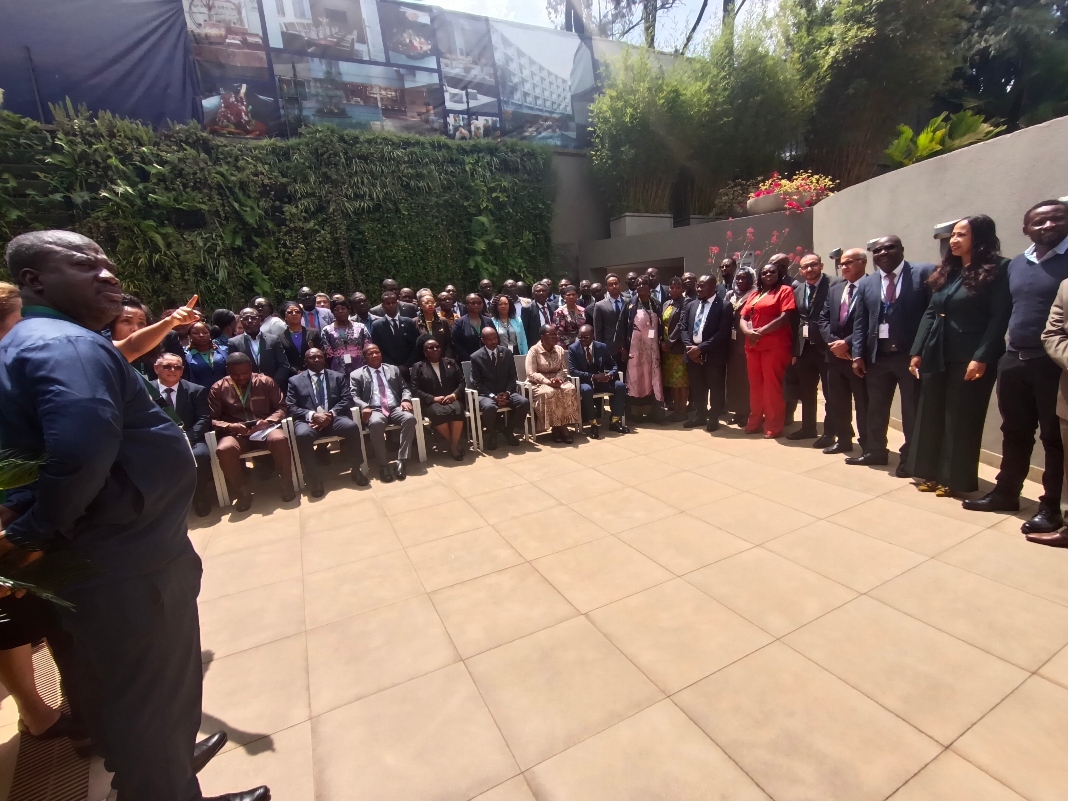
African workers could gain access to more diverse employment opportunities in Gulf countries if governments strengthen skills recognition, labour-market information and job-matching systems, according to a policy brief prepared for discussions on Africa-Gulf labour migration.
The Gulf Cooperation Council plus (GCC+) countries continue to rely heavily on migrant workers as their economies respond to demographic change, technological development, economic diversification and the green transition.
Employment across the six GCC countries increased from approximately 28 million workers in 2020 to 34.9 million in 2024. Excluding the United Arab Emirates, for which comparable nationality data were unavailable, the number of non-national workers in the region increased from 18.9 million in 2023 to 20.7 million in 2024.
Despite this demand, African labour migration to the Gulf remains concentrated in a relatively narrow range of occupations, particularly domestic work and other low- and semi-skilled jobs.
The brief notes that this pattern does not fully reflect changing labour demand in Gulf economies, where economic diversification and technological development are creating opportunities in sectors including information and communications technology, healthcare, manufacturing, logistics, tourism, financial services, engineering and green and digital activities.
This creates an opportunity for African countries to better connect their workers’ skills with emerging demand in destination countries.
The International Labour Organization says stronger skills portability systems can help address skills mismatches through skills anticipation and forecasting, skills profiling, upskilling, recognition of qualifications and prior learning, and improved skills matching.
For workers, the lack of recognition of qualifications across borders can result in underemployment, deskilling and “brain waste”, where people work in jobs below the level of their education, training or experience.
Kenya is among the African countries that could benefit from a stronger skills-based migration system. The ILO notes that Kenya draws on National Employment Authority data on jobseekers and skills profiles when identifying employment opportunities abroad.
A more coordinated system could enable Kenyan workers to demonstrate verified qualifications and competencies while allowing employers in Gulf countries to identify workers who meet specific occupational requirements.
The approach could also help broaden employment opportunities for African women, who remain heavily concentrated in domestic work in several Gulf labour markets.
Nairobi health workers issue strike notice over unresolved grievances
In Bahrain, 94 per cent of employed Ethiopian women worked in domestic services in 2022. Jordan’s 2025 Ministry of Labour data also demonstrate the continued importance of domestic work among registered African migrant workers.
The policy brief proposes linking labour-market forecasting, skills development, recruitment and qualification recognition throughout the migration process.
Workers could receive occupation-specific, language, digital and socio-emotional skills training before departure, while recruitment could be linked to verified vacancies and clearly defined competency requirements.
The brief also calls for safeguards to ensure workers are employed in the occupations and at the skill levels for which they were recruited, while recruitment fees and related costs should not be transferred to migrant workers.
Recognition should not end once workers reach destination countries. Migrants could be supported to acquire additional skills and document workplace learning, enabling career progression while creating a record of competencies that can be recognised when they return home.
African countries and Gulf destinations have already taken steps towards improving the comparability and recognition of qualifications. The African Continental Qualifications Framework, alongside regional frameworks developed by institutions such as the East African Community, IGAD and SADC, provides building blocks for greater skills portability.
The African Union has also strengthened labour migration data systems, including guidelines adopted in 2025 for the collection and use of quality administrative data on labour migration.
However, the brief notes that information systems remain fragmented, with limited sharing between countries of origin and destination. Data are also not consistently disaggregated by nationality, sex, occupation, sector and skill level, making it difficult to determine whether workers’ skills correspond to available opportunities.
The proposed cooperation between African and GCC+ countries therefore seeks to establish a stronger evidence base on labour-market demand, expand transparent and diversified migration pathways, improve training and recruitment, and establish practical arrangements for recognition of qualifications and prior learning.
For African workers, such cooperation could mean greater opportunities to secure jobs that match their qualifications while allowing destination countries to address genuine skills shortages.
The broader objective is to ensure that migration does not simply move workers across borders, but enables their skills to be recognised, developed and used effectively throughout their careers.