
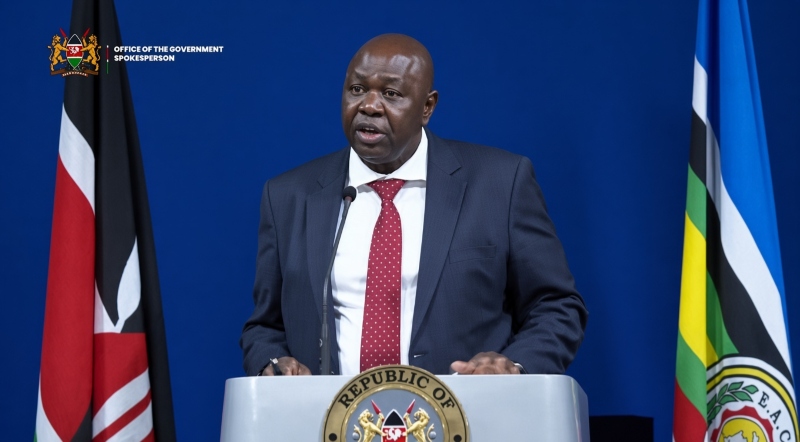
In Nairobi, Kenya, on September 7, 2026, the Kenyan government has taken steps to make clear its stance on the recent instructions relating to foreign national workers who are involved in small-scale trading, emphasizing that the measures are designed both to protect local livelihoods and to ensure the rights and dignity of East African nationals residing in the country.
That clarification comes as a result of President William Ruto’s instruction given in September 2 regarding foreign nationals who are involved in hawking and other forms of small-scale retail activity. The Government states that the measures are intended for the purpose of protecting Kenyan traders against unfair competition and at the same time for enhancing local participation in the economy.
The Government has stressed that these measures are not aimed at East African nationals or at undermining Kenya’s long-standing commitment to regional integration; rather it states that the emphasis is on making sure that businesses and economic activities adhere to Kenyan laws and regulations.
Because of worries regarding undocumented foreign nationals, the government is setting up an official system for documentation and registration, with a special focus on East African nationals who live in Kenya and do not have all the necessary documentation.
The Government is urging undocumented nationals from East Africa, in particular those from Burundi, to go to their respective embassies and high commissions in order to have their identity formally registered. The aim of this initiative is to enable people to regularise their status and to decrease their vulnerability to exploitation, health emergencies and harassment.
Africa’s Business Heroes names 20 entrepreneurs for Nairobi semi-final
The Embassy of Burundi together with other regional partners will cooperate in coordinating the process and in handling individual cases, and during the registration period in question persons going through the process will be regarded as being legally in Kenya, as the Government has clarified.
Kenya has likewise issued a firm warning concerning the harassment, intimidation and xenophobic treatment of foreign nationals. It has been instructed that the security agencies, local authorities and businesses should not discriminate arbitrarily against foreign nationals who have documentation or those who are going through the registration process.
The government states that Kenya’s position as a regional economic centre and its well-earned reputation for hospitality should not be affected by the disputes relating to the new trade measures, and has once again made it clear that foreign individuals who meet the necessary immigration, business and licensing requirements are covered by Kenyan law.
The Government has also dismissed accounts claiming that the latest directives constitute a general ban on foreign nationals or hostile actions against citizens of neighbouring countries. The officials say that the measures are aimed at regulating certain economic activities and at enforcing current legal requirements.
Kenya has once again demonstrated its commitment to the East African Community, regional integration and the principles of the Common Market Protocol; the Government states that its relations with its East African neighbours are grounded in common history, culture, economic interests and regional cooperation.
The authorities are asking the general public and companies to steer clear of xenophobic remarks and discrimination, stating that anyone who attempts to take advantage of the situation in order to mistreat foreign nationals will be subject to the full force of the law.
The Government states that it will keep on working with the regional governments, diplomatic missions, civil society organisations and humanitarian partners in order that the procedures concerning documentation and enforcement may be carried out in a fair, transparent and dignified manner.