
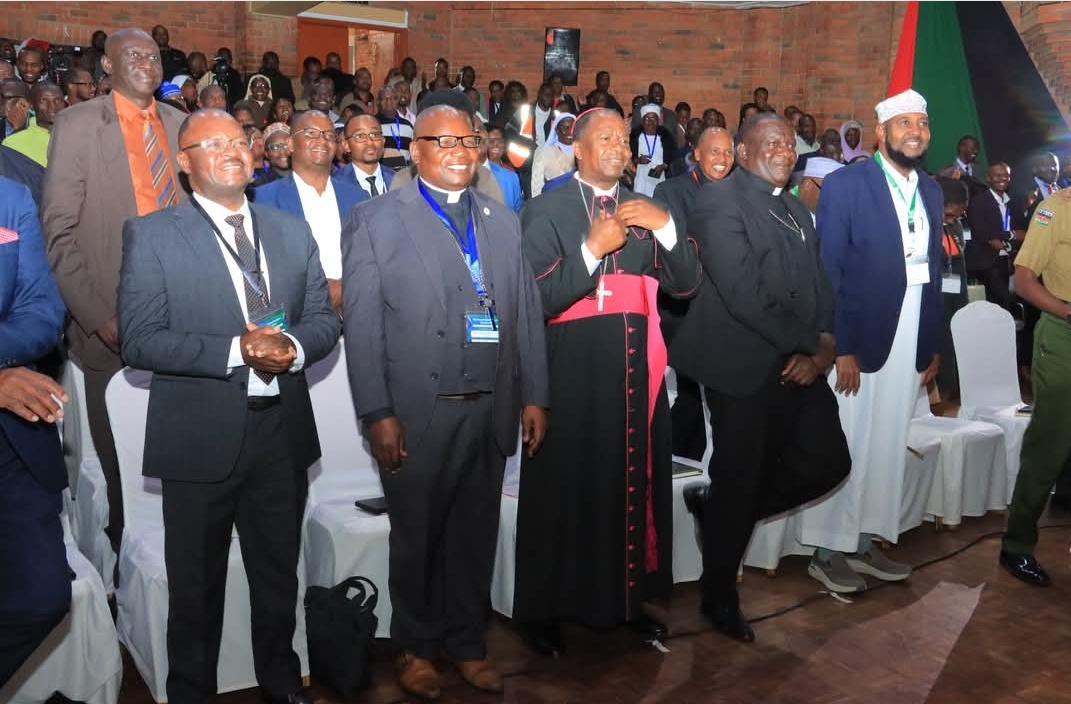
On September 3, 2026 in Nairobi, religious leaders as well as representatives of constitutional bodies, professional organisations and civil society groups have expressed concerns about the increasing political tensions and the possible threats to Kenya’s 2027 general election.
The worries arose at the two-day National Stakeholders Convention taking place at Ufungamano House in Nairobi from September 2 to 3, 2026, and this event gathered representatives from six umbrella religious organisations, seven constitutional agencies, five professional associations and 21 civil society organisations.
The convention was concerned with evaluating the readiness of constitutional institutions to organise democratic, credible and peaceful elections and in doing so developed strategies to protect the 2027 electoral cycle.
As there remain about 11 months until the next General Election, the delegates stated that both anxiety and political tension were on the rise, especially in view of Kenya’s history of violence linked to previous elections that involved incumbent leaders.
The delegates used the 1997, 2007 and 2017 elections as examples of the terrible consequences of political conflict, such as loss of life, destruction of property and disruption of livelihoods.
Five Major Risks Identified
The convention has named five significant risks which it believes could endanger the credibility, peace and inclusivity of the 2027 elections.
1. Political violence, goonism and the exploitation of young people
The delegates were worried about the ongoing use of political violence, human rights violations, and the involvement of organised groups during political contests.
They claimed that if selective policing were carried out together with alleged political protection of violent groups, this could lead to an increase in tensions and cause a confusion between political gangs and security agencies.
The convention called for a quick, fair investigation, arrest and prosecution of anyone who finances or helps bring about political violence, emphasizing that accountability should go beyond those who carry out the violence to include those who organize and fund it.
Religious leaders have committed themselves to carrying out a public campaign against political violence and to calling for the law to be applied equally no matter one’s political affiliation.
2. The capture of institutions and the abuse of state power
A major concern was the possibility of independent institutions being taken over and state power being misused for political ends, as the delegates put it.
The convention also expressed concern that political figures might make financial donations to religious organisations, on the grounds that such donations could affect the independence and moral authority of religious leaders.
Therefore the religious umbrella organisations promised to restrict political access to religious organisations and to encourage anonymous donations in churches and mosques.
NCCK urges NCIC to act early to prevent 2027 election violence
They also stated that religious organisations should not be employed to give political figures legitimacy or to offer religious approval to political campaigns.
3. Money, the financing of campaigns, and the capture of elite positions
The delegates also warned about the increasing role of money in Kenyan politics.
They claimed that the over-monetisation of politics can affect the choice of candidates, the nature of political competition, the results of elections, and government decision-making, and might thus lead to a situation where wealthy interests have a disproportionate amount of political influence.
The convention urged there to be greater public awareness of the dangers involved in illegal campaign financing and resolved that religious institutions should carry out civic and voter education in their places of worship.
The delegates asked Kenyans to turn down any bribery in the election and to examine the origins and effects of the money given out during political campaigns.
4. Misinformation, hate speech and political polarisation
Misinformation and disinformation were regarded as one of the main threats to the 2027 electoral process.
The delegates stated that political figures are able to use carefully constructed narratives in order to discredit their opponents, manipulate public opinion and divide communities along political, ethnic or regional lines.
The convention has particularly cautions people against “us-versus-them” types of narratives which represent certain communities or groups as the cause of national problems.
The religious leaders have committed themselves to promoting narratives which help to strengthen national unity and have also promised to work with other parties to set up fact-checking procedures that are able to identify and disseminate reliable information.
5. The exclusion of young people, women and people with disabilities
The convention also brought to light the kind of continued structural exclusion it had described of youth, women and people with disabilities (PWDs) from political leadership and decision-making.
The delegates referred to statistics showing that those under the age of 35 make up about 75 per cent of the population but yet hold only a small share of the parliamentary seats. Although women account for approximately half of the population, they were also said to be considerably underrepresented in the National Assembly, and people with disabilities continue to be severely underrepresented in elected leadership positions.
The religious leaders have committed to making use of their organisations and connections in order to provide youth, women and people with disabilities with greater opportunities for taking on leadership roles.
They also demanded a review of the laws, policies and internal institutional practices which may lead to their being excluded.
A Call for Kenyans to Participate
The convention not only identified the risks but also strongly urged citizens to stay involved in the democratic process.
The delegates stated that political violence, intimidation, abductions, human rights violations and other kinds of political repression may discourage people from taking part in elections and in governance.
They cautions that a lack of interest among voters can in the end be of advantage to political figures who wish to win elections by suppressing or discouraging their opponents’ supporters from taking part.
The convention therefore asked Kenyans not to give up their democratic rights on account of fear, intimidation or political manipulation.
It also called on the citizens to refuse the practice of taking money and other benefits in return for political support.
The delegates stated that handouts connected with elections can lead to a situation in which political financiers then ask for government contracts or other advantages, which may in turn promote corruption and result in a failure to provide proper services.
Religious Leaders Call for Collective Responsibility
The stakeholders concluded by saying that the 2027 General Election was a crucial point in Kenya’s history and urged concerted action to safeguard the nation’s democratic institutions and social cohesion.
They stressed that it cannot be left solely to political leaders and state institutions to build a peaceful and prosperous Kenya, as ordinary citizens, religious organisations, civil society and constitutional institutions must also take an active part.
The convention took inspiration from both Christian and Islamic teachings, mentioning Philippians 2:4, which urges people to think about the interests of others, and Surah Al-Hashr 59:9, which stresses the merit of giving priority to others even though one has one’s own needs.
The message of the convention was therefore clear that Kenya’s electoral future in 2027 will depend not only on the behaviour of politicians and institutions but also on the decisions taken by citizens.
As the election draws near, various stakeholders are urging people to remain vigilant, to take part in the process in a peaceful manner, to ensure that the institutions remain independent, to guarantee accountability, to promote inclusion, and to firmly oppose political violence and electoral bribery.
They stressed that the duty of protecting Kenya’s democratic future lies with all people.