

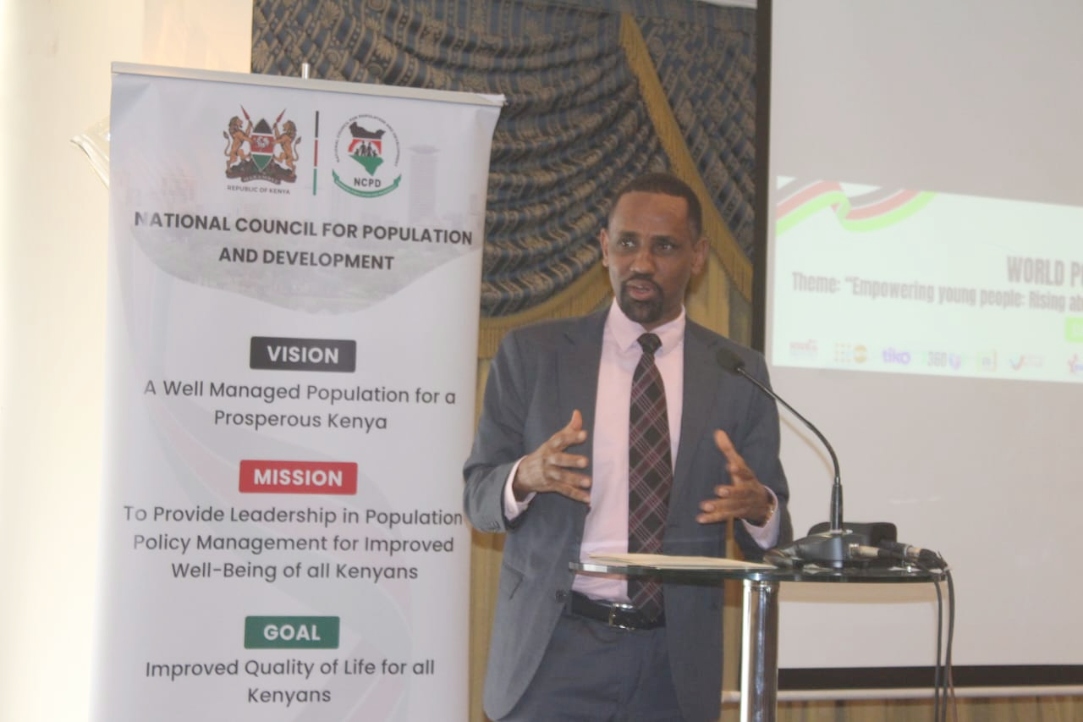
Kenya’s population dynamics are changing in ways that go beyond the numbers. As the country celebrated World Population Day 2025, the National Council for Population and Development (NCPD) pointed out both progress and contradictions in the nation’s social structure.
Director General Mohammed Sheikh noted that marriage registrations fell from 20,000 in 2023 to 15,000 this year. While this decline raised concerns, he explained that it does not mean Kenyans are avoiding marriage. “The challenge is that many couples do not receive their marriage certificates on time. Young people are also increasingly hesitant to formalize marriages,” he stated.
Behind the statistics is a generational shift. Many young Kenyans are redefining family, balancing economic realities, career goals, and changing cultural expectations. Some choose long-term partnerships without the legal contracts, while others postpone marriage due to financial struggles like high living costs and unemployment.
Kenya’s platform economy and the changing nature of urban life
Still, Sheikh emphasized that marriage remains vital to society. It offers companionship, stability, and a foundation for raising children. He encouraged the youth to see themselves as “drivers of growth, family stability, and national development.”
Interestingly, the drop in formal unions occurs alongside positive trends in other areas of population health. Child mortality rates have significantly decreased, teenage pregnancies are declining, and urban development opportunities are growing. Cases of abuse against women and girls have also reduced, showing progress in gender equality and safety.
The contrast is striking: while traditional institutions like marriage face reluctance, other indicators suggest a society that is healthier, safer, and more future-oriented. Sheikh reminded Africans of their role in the global conversation: “We must bring the world to Africa.”
This year’s theme was “Empowering Young People, Rising Above Challenges and Making Informed Choices for the Future.” It serves as a timely reminder that Kenya’s demographic story is not just about numbers, but choices that are shaping the future.