
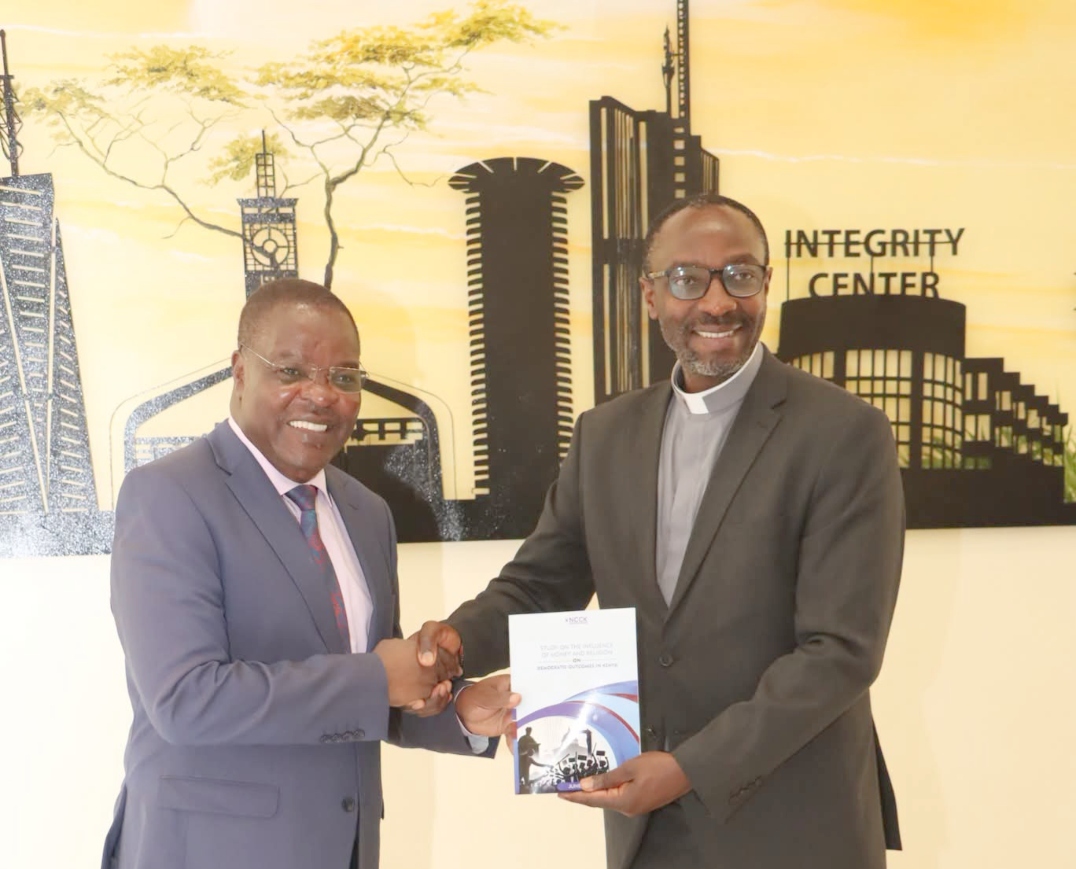
The National Council of Churches of Kenya (NCCK) has called on the Ethics and Anti-Corruption Commission (EACC) to intensify scrutiny of political financing ahead of the 2027 General Election, warning that illicit campaign funds could undermine governance and public confidence in democratic institutions.
The call was made during a meeting between NCCK officials and EACC leadership on September 30, 2026, where the church umbrella body presented recommendations on the state of the nation and Kenya’s preparedness for the next election.
NCCK said a study it conducted on the influence of money and religion on democratic outcomes found that 90 per cent of respondents considered money highly influential in political campaigns and electoral outcomes.
According to the council, the monetisation of politics creates expectations among campaign financiers that they will recover their investments through government appointments, tenders and contracts after elections.
NCCK therefore urged the EACC to develop a system for monitoring campaign expenditure and tracing the sources of funds well before the official campaign period begins.
The council also pointed to campaign spending limits contained in election financing regulations, citing figures of up to Sh8 billion for presidential campaigns, Sh181 million for governors and senators/women representatives, Sh100 million for Members of the National Assembly and Sh22 million for Members of County Assembly.
It asked the anti-graft agency to distinguish legitimate campaign financing from money obtained through corruption, money laundering and theft of public resources.
NCCK condemns disruption of worship services by police
The call comes as the EACC has itself been engaging religious leaders on the risks associated with illicit political financing. Earlier in September, EACC Chairperson Bishop David Oginde warned religious leaders against accepting or legitimising illicit campaign funds, saying such money could distort political competition and create pressure on elected leaders to reward financiers through public resources.
NCCK further called for stronger public education to discourage voter bribery. It offered to make church facilities available to the EACC for public sensitisation and training on ethical behaviour and corruption prevention.
The council also proposed the creation of a system to track major political financiers and the government tenders awarded to them after elections. It argued that greater transparency could help citizens identify possible conflicts between political financing and public procurement.
On political leadership, NCCK urged the EACC to strengthen enforcement of constitutional integrity requirements and address unethical conduct by public officials. It also called for operational guidelines for political parties to address issues including campaign financing, voter bribery and accountability for political funds.
The council expressed concern about public perceptions regarding the independence and effectiveness of constitutional oversight institutions, urging the EACC to demonstrate its independence and impartial enforcement of its mandate.
NCCK said it was ready to partner with the commission in public education and anti-corruption initiatives, including using its extensive church structures to reach communities across the country.
The EACC’s own Kenya Integrity Plan 2023–2028 identifies implementation of the Election Campaign Financing Act and production of compliance reports among the measures connected to strengthening integrity during the electoral cycle.
The NCCK meeting comes as preparations for the 2027 elections intensify, putting campaign financing, ethical leadership and accountability among the issues expected to receive greater public attention in the months ahead.