
The Ethics and Anti-Corruption Commission (EACC) has called for a national shift towards preventing corruption by promoting integrity in public institutions and society. It believes that removing opportunities for corruption is a more lasting solution than depending solely on investigations and prosecutions.
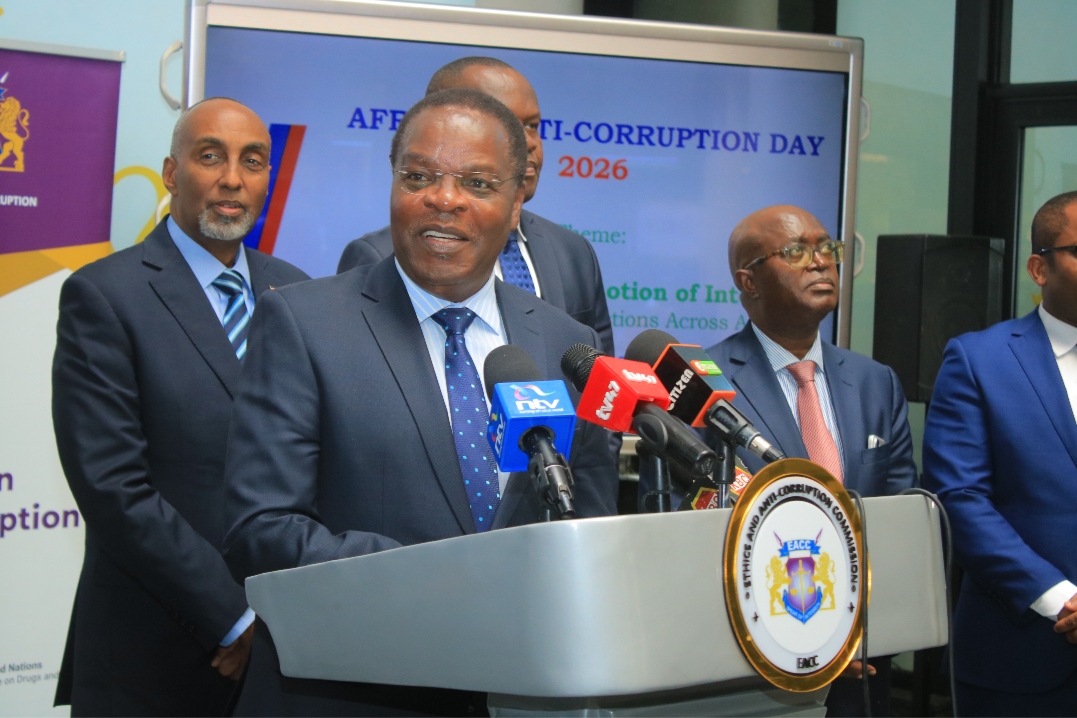
During the celebration of African Anti-Corruption Day at the Integrity Centre in Nairobi on Monday, EACC Chairperson David Oginde stated that the commission is enhancing corruption prevention through governance reforms, public education, corruption risk assessments, and citizen engagement.
“Promoting integrity is an important goal we must commit to because it helps strengthen our institutions and reduces, if not eliminates, corruption. The fight against corruption must also aim to decrease the chances of it happening,” Oginde said.
He noted that citizen participation has become a strong driver of accountability. He praised the media for exposing corruption and encouraged Kenyans to take a more active role in protecting public resources.
Oginde also urged religious institutions to reject the acceptance of corrupt donations. He suggested that faith-based organizations should take a firmer stance in advocating for ethical leadership.
State on the EACC report and the crisis of policing in Kenya
Drawing parallels with competitive sports, he claimed that Africa’s greatest achievement wouldn’t be winning the FIFA World Cup but rather creating societies where integrity is the core value.
“If we all trained for integrity with the same discipline that elite athletes have for soccer, Africa’s greatest triumph wouldn’t be lifting the World Cup trophy. It would be building a continent where integrity defines us and corruption is defeated,” he said.
Law Society of Kenya President Charles Kanjama called for an independent annual Rule of Law Report to evaluate Kenya’s governance systems and identify institutional weaknesses that allow corruption. He pointed out that while many publicly condemn corruption, they often fail to uphold the accountability standards required by the Constitution in individual cases.
EACC Chief Executive Officer Abdi Mohamud emphasized this year’s African Union theme, Scaling Up the Promotion of Integrity and Anti-Corruption Actions Across Africa. He highlighted the need for governments, the private sector, civil society, professional bodies, development partners, the media, and citizens to collaborate in fighting corruption.
He warned that corruption is a significant barrier to development, pointing out that it robs young people of opportunities, weakens institutions, erodes public trust, and undermines national progress.
National Construction Authority Executive Director Maurice Aketch urged public institutions to enhance ethical leadership and professionalism. Deputy Inspector General of Police Gilbert Masengeli reaffirmed the National Police Service’s commitment to supporting anti-corruption efforts. The United Nations Office on Drugs and Crime also reiterated its support for Kenya through initiatives aimed at improving access to justice, financial investigations, and asset recovery.