

Schneider Electric, a global energy technology leader, reaffirmed its commitment to acc poopelerating an inclusive energy transition by expanding access to affordable, reliable, and sustainable green electricity across Sub-Saharan Africa. Shared at the opening of the Alliance for Rural Electrification (ARE) Energy Access investment Forum Access investment Forum (EAIF) 2026 Conference, the commitment reflects Schneider Electric’s global ambition to impacting 100 million people in gaining access to sustainable energy by 2030 and support long-term social, economic, and climate resilience in underserved communities.
The International Energy Agency (IEA), Tracking SDG 7: The Energy Progress Report 2025, reports that more than 666 million people worldwide still lack access to electricity, with Sub-Saharan Africa bearing the largest share of the gap. Of the 20 countries with the widest electricity access deficits in 2023, 18 are in the region. The IEA notes that without meaningful acceleration, the goal of universal energy access by 2030 will be difficult to achieve. In this context, distributed renewable energy solutions—including mini-grids and off-grid solar—are seen as critical to reaching remote areas and vulnerable populations.
To address these challenges, Schneider Electric is encouraging global collaboration across stakeholders to leads to “energy democracy” and strengthen inclusive energy governance as a pathway to overcoming the energy trilemma of access, affordability, and reliability. Shifting from centralized systems to community-led, distributed energy solutions can help accelerate the energy transition while sustaining local economic value.
Over the four-day conference, Schneider Electric presented its portfolio of solutions and innovations, including the Climate Smart Village business model, which combines smart technologies with inclusive, community-centred approaches to accelerate the deployment of decentralized clean energy and deliver tangible social and economic impact at the local level.
“Access to energy must go hand in hand with strengthening human capacity and fostering local entrepreneurship,” said Ayush Gupta, Director of Global Strategy & Business for Anglophone Africa, Access to Energy at Schneider Electric. “Since 2009, we have integrated clean electricity access with vocational training, support for local entrepreneurs, and impact investing—ensuring that communities gain not only reliable energy, but also economic opportunities and long-term self-reliance to power progress.”
Moving beyond commitments, Schneider Electric has generated measurable, on-the-ground impact. Through its initiatives, the company has empowered more than one million people, supported 11,000 entrepreneurs across 60 countries, and impacted 61.7 million individuals with access to clean electricity—advancing its global ambition to reach 100 million beneficiaries by 2030.
Advancing Community Resilience Through Decentralized Energy Solutions
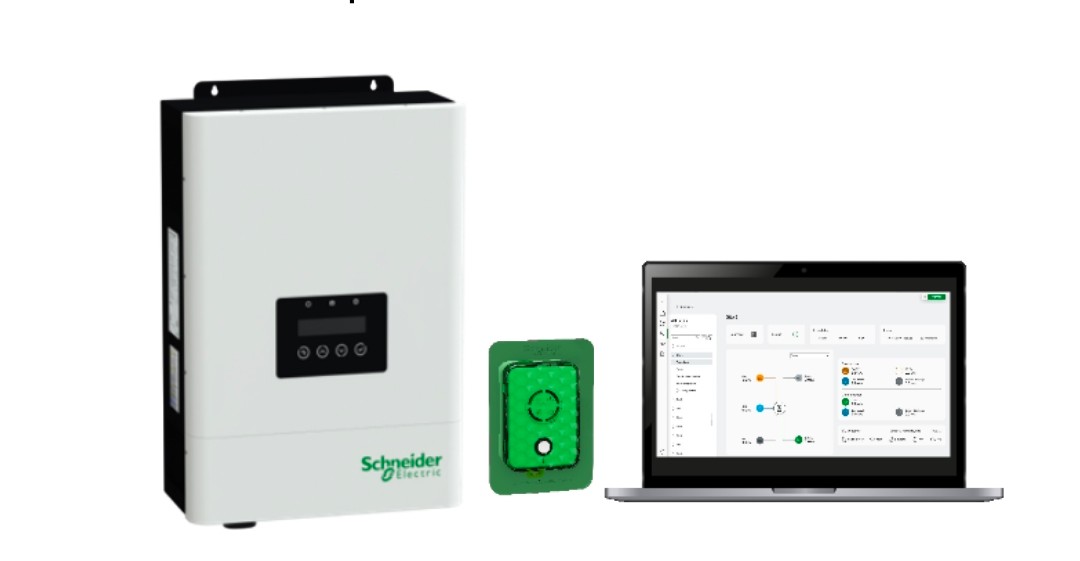
At ARE EAIF 2026, Schneider Electric reaffirmed its commitment to advancing decentralized energy solutions that deliver tangible impact for communities across Sub-Saharan Africa. Through the Homaya Advanced Solar Solution, the company enables access to reliable, clean electricity for last-mile communities, including healthcare facilities, schools, and micro-entrepreneurs. Enabled by digital monitoring via EcoStruxure™ Energy Access, the solution supports long-term energy reliability, ensures continuity of essential services, and helps unlock improved livelihoods and sustainable economic empowerment at the local level.

Another key solution showcased is Altivar Solar ATV320, a solar-powered water pumping solution designed to expand access to clean water and enable sustainable irrigation in regions with off-grid or limited energy access.
By automatically adapting pump performance to available solar energy, Altivar Solar contributes to higher agricultural productivity, enhanced food security, and improved public health outcomes. Together, these integrated electricity and water solutions provide a vital foundation for community resilience, while accelerating an inclusive, impact-oriented energy transition with lasting benefits.
[contact-form][contact-field label=”Name” type=”name” required=”true” /][contact-field label=”Email” type=”email” required=”true” /][contact-field label=”Website” type=”url” /][contact-field label=”Message” type=”textarea” /][/contact-form]
Energy Access Fuels Community Livelihoods
Schneider Electric’s Climate Smart Village solutions in India illustrates how energy, when designed around local needs, can become a catalyst for wider social and economic transformation. In the villages of Sehal and Chatti in Jharkhand, an integrated solar energy system with a capacity of approximately 85 kW now powers not only lighting, but also irrigation, agricultural processing, public services, and local businesses. Reliable electricity access has enabled farmers to intensify cultivation and move into higher-value crops, doubling household incomes over four years and reducing seasonal migration. The program has also expanded women’s participation in economic activities and delivers an estimated annual reduction of 60,000 kilograms of carbon emissions, reinforcing community resilience in the face of climate challenges.
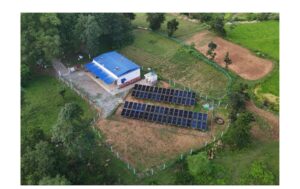
The success in India highlights the transformative potential of community-focused energy solutions—an approach that could equally benefit Sub-Saharan Africa, where energy access challenges are widespread. By leveraging decentralized renewable energy, digital tools, and community engagement, Climate Smart Village models can be adapted to local realities.
“Access to clean and reliable electricity can transform communities by unlocking economic opportunity and strengthening resilience,” said Ifeanyi Odoh, Country President of Schneider Electric East Africa. “Realizing this potential requires solutions rooted in local realities and supported by strong technical expertise and partnerships. Through the Climate Smart Village solution, decentralized renewable energy connects energy access with social progress and climate resilience—helping communities across Sub-Saharan Africa build a more sustainable future.”
About Schneider Electric
Schneider Electric is a global energy technology leader, driving efficiency and sustainability by electrifying, automating, and digitalizing industries, businesses, and homes. Its technologies enable buildings, data centers, factories, infrastructure, and grids to operate as open, interconnected ecosystems, enhancing performance, resilience, and sustainability. The portfolio includes intelligent devices, software-defined architectures, AI-powered systems, digital services, and expert advisory. With 160,000 employees and one million partners in over 100 countries, Schneider Electric is consistently ranked among the world’s most sustainable companies.
www.se.com