
Air France–KLM’s operations across Africa showed modest growth in the third quarter of 2025 with capacity rising by 1.5% as yields increased by 1.4%, leading to broadly stable unit revenue for flights to and from the continent. This was even as load factors slipped slightly to 88%. The stability on Africa routes comes on the back of a broader network expansion and underscores the Group’s sustained commitment to long-haul connectivity across emerging markets, including East Africa.
Overall, the Group delivered a stable operating result of €1.2 billion (KSh 180.5b) while total revenues reached €9.2 billion (KSh 1.38t), up 2.6% year-on-year, driven by gains across the passenger network, Transavia and the maintenance business.
Group capacity increased by 5.1%, while fuel costs (after hedging) fell by 8.9%, helping offset the negative impact of a solidarity ticket tax in France and a sharp 41% tariff rise at Schiphol Airport, both of which dampened unit revenue. Unit revenue at constant currency decreased 0.5%, whereas unit costs rose by a moderate 1.3%, reflecting continued productivity gains.
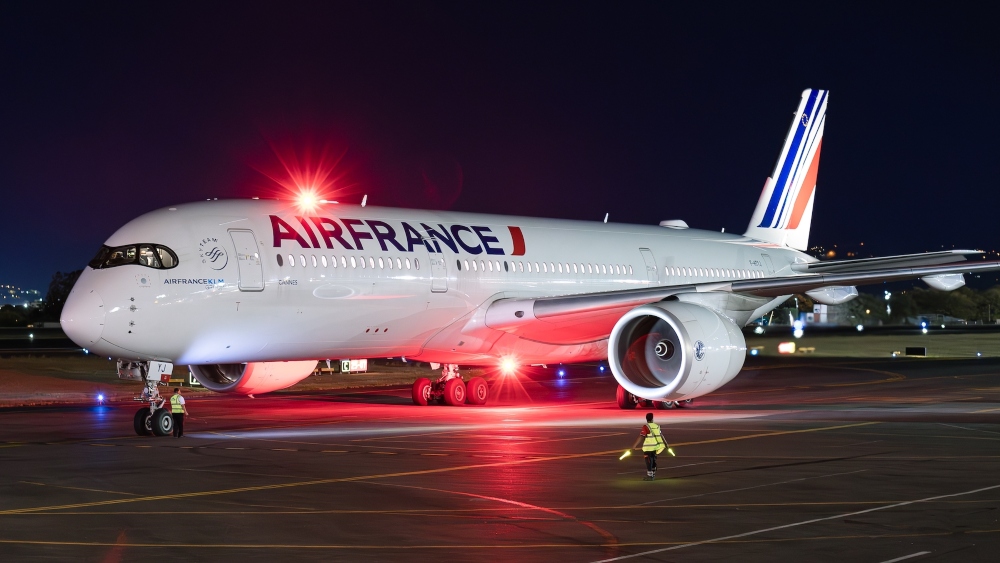
Commenting on the results, Group CEO Benjamin Smith noted that “premium cabins performed exceptionally well across Air France and KLM,” contributing to sustained yields on long-haul markets. He added that the fleet renewal programme continues apace: one third of the Group’s fleet is now next-generation aircraft, many of them quieter, more fuel-efficient and better suited to long-haul flying, a key pillar of the Group’s environmental and customer service strategy.
Cash generation remained strong with recurring adjusted operating free cash flow for the first nine months of 2025 reaching €715 million (KSh 107.6b), a €692 million leap from the previous year. The Group ended September with cash reserves of €9.5 billion (KSh 1.4t), well above its target range. Net debt rose to €7.8 billion (KSh1.2t), but the leverage ratio remained under control at 1.6×, within the Group’s target range for 2025. The Group further continued to simplify its balance sheet via redemptions of hybrid securities and strategically timed debt issuances.
Air France-KLM group: A global aviation leader with a European Core
The passenger network showed resilience across most regions, and while Africa recorded only modest growth, other long-haul markets such as Latin America, Asia, the Middle East, and the Caribbean–Indian Ocean region posted strong yield performance, especially in premium and long-haul cabins. Cargo operations, however, faced headwinds as capacity rose but unit revenues per ton-kilometer fell 5.1% at constant currency, primarily due to reduced demand and maintenance-related downtime for freighters.
The low-cost carrier unit, Transavia, experienced a challenging summer marked by competitive pressure in Europe and higher airport taxes, particularly in the Netherlands and France. Its unit revenue fell 2.8%, and rising operational costs tempered profitability.
In contrast, the maintenance arm of the Group continued to perform well. Third-party maintenance revenues rose 12.9%, driving a strong increase in operating profit; the maintenance business now represents an important diversification pillar, with a growing long-term order book valued at USD 10.4 billion (KSh1.3t).
Meanwhile, fleet renewal remains central to the Group’s medium-term strategy. As of end-September, 32% of the fleet comprised new-generation aircraft, up eight percentage points year-on-year. In 2025 alone, Air France–KLM took delivery of 38 next-gen aircraft, including new Airbus A220-300s delivered on sustainable aviation fuel blends. These investments support the Group’s ambition to reduce per-seat fuel consumption and CO₂ emissions, and enhance long-haul comfort, an important signal for travellers between Africa and Europe.
Following the quarter, the Group completed the acquisition of a 2.3% stake in Canada’s WestJet, thereby deepening its transatlantic partnerships and reinforcing its long-haul network offering, for a strategic step with potential positive implications for African travellers wishing to connect to North America via Europe.
Air France–KLM reconfirmed its full-year 2025 guidance including capacity growth of 4–5%, modest single-digit growth in unit costs, net capital expenditure between €3.2 and €3.4 billion (KSh480–512b), and a leverage ratio between 1.5× and 2.0×.
For East African travellers and businesses, these results signal continued investment in fleet modernisation, premium long-haul product expansion and global connectivity, all of which bode well for long-haul travel and freight links with global markets.
(Exchange rate used for conversions: €1 = KSh 150.30; USD1=KSh129.20)